


|
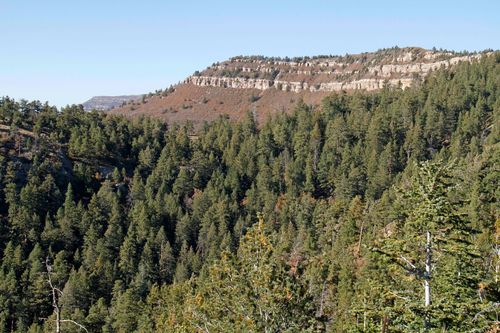
SWAP Habitat
|
|
Rocky Mountain Lower Montane Forest
|
|
NVC Name
|
|
SWAP General Vegetation Type
|
|
ALPINE and MONTANE VEGETATION
|
|
Habitat Size
|
|
9383 square miles
|
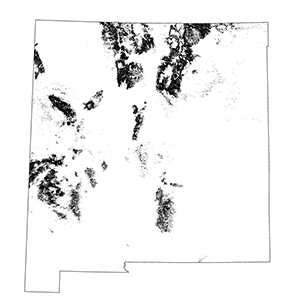
The Rocky Mountain Lower Montane Forest is a mid-elevation (2,350–3,300 m [7,700–10,800 ft]) forest, woodland, and savanna habitat that occurs primarily in the Southern Rocky Mountains and Arizona/New Mexico Mountains ecoregions with scattered occurrences in the Colorado Plateaus, High Plains and Tablelands, and Chihuahuan Desert ecoregions. This habitat is composed of mixed-conifer and ponderosa pine (Pinus ponderosa) forests that encompass much of the mid-elevations of New Mexico’s mountains.
- Characteristic trees are predominantly conifers and include white fir (Abies concolor), Douglas-fir (Pseudotsuga menziesii), ponderosa pine, blue spruce (Picea pungens), southwestern white pine (Pinus strobiformis), with Rocky Mountain juniper (Juniperus scopulorum) in the sub-canopy. Cold-deciduous trees can be co-dominants in the canopy, including quaking aspen (Populus tremuloides), Gambel oak (Quercus gambelii), and bigtooth maple (Acer grandidentatum). At lower-elevation margins, two-needle piñon (Pinus edulis) and one-seed juniper (J. monosperma) may be present in the subcanopy.
- Cold-deciduous, broad-leaved shrubs can be common in the undergrowth, e.g., Rocky Mountain maple (A. glabrum), the shrub form of Gambel oak, rockspirea (Holodiscus dumosus), fivepetal cliffbush (Jamesia americana), mountain snowberry (Symphoricarpos oreophilus), and New Mexico locust (Robinia neomexicana). The conifer common juniper (J. communis) can be a common subshrub, particularly on drier sites.
- In closed-canopy conditions, the understory may be sparse with only scattered occurrences of grasses and subshrubs such as Ross’ sedge (Carex rossii) and creeping barberry (Mahonia repens), respectively. Under more open canopies, grasses can be abundant, leading to the formation of savanna-like woodlands. Representative grasses include mountain muhly (Muhlenbergia montana), blue grama (Bouteloua gracilis), and Arizona fescue (Festuca arizonica). On more moist and cool sites, mesic forbs and grasses can be abundant, including fringed brome (Bromus ciliatus), woodland strawberry (Fragaria vesca), Fendler's meadow-rue (Thalictrum fendleri), and American vetch (Vicia americana).
- This widespread forest habitat occurs across a broad range of soils, geology, and topography, from mesa tops and foothills to steep, north-facing slopes and ridges. Fire regimes vary from mixed severity (surface and canopy fires) to low severity (mostly frequent surface fires in savannas). In general, fire suppression has led to encroachment of more shade-tolerant, less fire-tolerant species, resulting in an associated increase in fire hazard.
Species
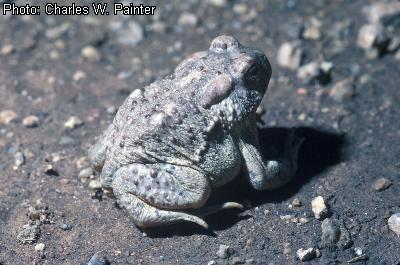
Amphibians
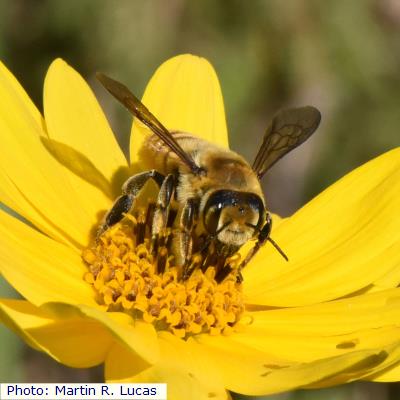
Bees
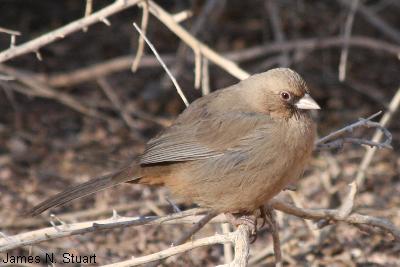
Birds
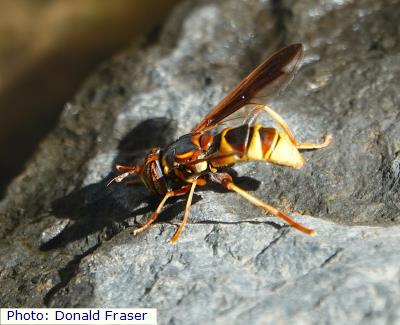
Flies
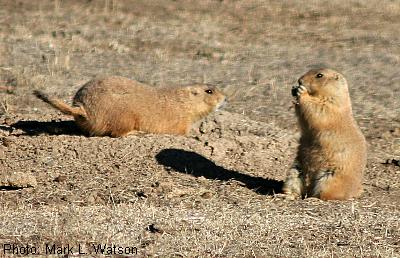
Mammals
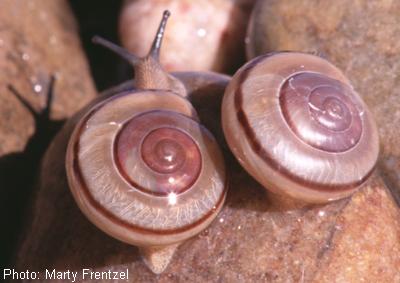
Molluscs
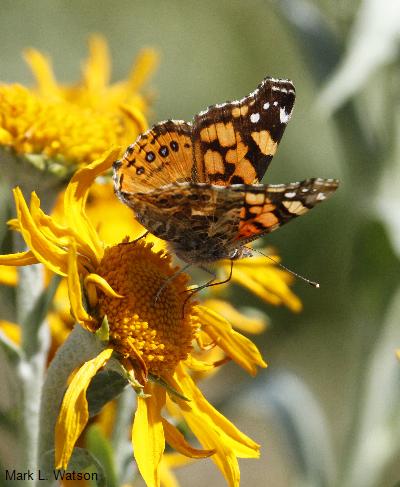
Moths and Butterflies
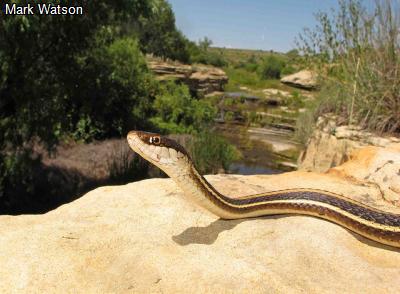
Reptiles
SGCN Amphibians in the Rocky Mountain Lower Montane Forest
This Species needs a photo.
If you have one you would like to provide, please email it to virginia.seamster@dgf.nm.gov.
Include the species name, your name and organization for the photo credit.
Thank you!
This Species needs a photo.
If you have one you would like to provide, please email it to virginia.seamster@dgf.nm.gov.
Include the species name, your name and organization for the photo credit.
Thank you!
This Species needs a photo.
If you have one you would like to provide, please email it to virginia.seamster@dgf.nm.gov.
Include the species name, your name and organization for the photo credit.
Thank you!
This Species needs a photo.
If you have one you would like to provide, please email it to virginia.seamster@dgf.nm.gov.
Include the species name, your name and organization for the photo credit.
Thank you!
This Species needs a photo.
If you have one you would like to provide, please email it to virginia.seamster@dgf.nm.gov.
Include the species name, your name and organization for the photo credit.
Thank you!
This Species needs a photo.
If you have one you would like to provide, please email it to virginia.seamster@dgf.nm.gov.
Include the species name, your name and organization for the photo credit.
Thank you!
This Species needs a photo.
If you have one you would like to provide, please email it to virginia.seamster@dgf.nm.gov.
Include the species name, your name and organization for the photo credit.
Thank you!
This Species needs a photo.
If you have one you would like to provide, please email it to virginia.seamster@dgf.nm.gov.
Include the species name, your name and organization for the photo credit.
Thank you!
This Species needs a photo.
If you have one you would like to provide, please email it to virginia.seamster@dgf.nm.gov.
Include the species name, your name and organization for the photo credit.
Thank you!
This Species needs a photo.
If you have one you would like to provide, please email it to virginia.seamster@dgf.nm.gov.
Include the species name, your name and organization for the photo credit.
Thank you!
This Species needs a photo.
If you have one you would like to provide, please email it to virginia.seamster@dgf.nm.gov.
Include the species name, your name and organization for the photo credit.
Thank you!
This Species needs a photo.
If you have one you would like to provide, please email it to virginia.seamster@dgf.nm.gov.
Include the species name, your name and organization for the photo credit.
Thank you!
This Species needs a photo.
If you have one you would like to provide, please email it to virginia.seamster@dgf.nm.gov.
Include the species name, your name and organization for the photo credit.
Thank you!
This Species needs a photo.
If you have one you would like to provide, please email it to virginia.seamster@dgf.nm.gov.
Include the species name, your name and organization for the photo credit.
Thank you!
This Species needs a photo.
If you have one you would like to provide, please email it to virginia.seamster@dgf.nm.gov.
Include the species name, your name and organization for the photo credit.
Thank you!
This Species needs a photo.
If you have one you would like to provide, please email it to virginia.seamster@dgf.nm.gov.
Include the species name, your name and organization for the photo credit.
Thank you!
This Species needs a photo.
If you have one you would like to provide, please email it to virginia.seamster@dgf.nm.gov.
Include the species name, your name and organization for the photo credit.
Thank you!
This Species needs a photo.
If you have one you would like to provide, please email it to virginia.seamster@dgf.nm.gov.
Include the species name, your name and organization for the photo credit.
Thank you!
This Species needs a photo.
If you have one you would like to provide, please email it to virginia.seamster@dgf.nm.gov.
Include the species name, your name and organization for the photo credit.
Thank you!
This Species needs a photo.
If you have one you would like to provide, please email it to virginia.seamster@dgf.nm.gov.
Include the species name, your name and organization for the photo credit.
Thank you!
Threats and Conservation Actions
Result for:
All
Natural System Modifications
As appropriate to local site conditions (e.g., topography, prevailing winds, disturbance history, infrastructure) (Urza et al. 2023) and not in persistent piñon (Pinus spp.)-juniper (Juniperus spp.) woodlands (Romme et al. 2009, Darr et al. 2022), thin stands of trees in forests and woodlands to natural or historic densities that reduce the probability of insect and disease outbreaks and stand-replacing wildfires and promote the growth of native understory cover (Redmond et al. 2023). Avoid unnecessary removal of large old-growth trees and snags, which serve as important wildlife habitat (Kalies and Rosenstock 2013); leave some juvenile trees or plant seedlings to promote establishment of new trees (Redmond et al. 2023); use best practices to maintain soil health (e.g., Tomao et al. 2020) including retaining sufficient seed trees and sources of mycorrhizal inoculum (Simard et al. 2021) and limiting pile burning and mastication where possible (Ross et al. 2012); implement landscape- and regional-scale heterogeneity in treatment design (Bradley 2009); and evaluate treatment effectiveness (e.g., McKinney et al. 2022, Davis et al. 2024, Hood et al. 2024), including monitoring local SGCN populations. Potential collaborators: BLM, NPS, USFS, SFD, SLO, non-profit organizations.
Natural System Modifications
Assess the impacts of stream-flow magnitude, frequency, timing, duration, and rate of change on riparian ecosystems and the effects of hydrologic alterations on these ecosystems. Determine flows needed to sustain SGCN and their habitats and the effects of flow modification by upstream dams and of upland disturbances in local watersheds (Goeking and Tarboton 2022). Work with agencies that manage dams and reservoirs to ensure released environmental flows match amounts and timing of flow needed for persistence of native riparian communities and associated SGCN, including allowing for overbank flows to coincide with seed dispersal from native vegetation (e.g., Greco 2013) and when saturated soil can best benefit SGCN prey. Potential collaborators: BOR, USACE, USFWS, USGS, NMED, NMOSE, universities, private industry.
Agriculture and Aquaculture
Biological Resource Use
Climate Change and Severe Weather
Energy Production and Mining
Human Intrusions and Disturbance
Natural System Modifications
Residential and Commercial Development
Transportation and Service Corridors
Assess the synergistic effects between climate change and other threats to SGCN and their habitats (e.g., Friggens et al. 2019, Parks et al. 2019). Incorporate appropriate climate adaptation strategies and frameworks into projects designed to address these synergistic effects. This may include enhancing connectivity (CEQ 2023), facilitating a species’ innate adaptive capacity (Thurman et al. 2022), enhancing genetic diversity (Powell 2023), considering local adaptation (Meek et al. 2023), or considering whether it is most appropriate to resist, accept, or direct ecosystem transformation (Lynch et al. 2021, Stevens et al. 2021). Projects should acknowledge ecosystem dynamism and incorporate indigenous knowledge (e.g., Roos et al. 2022, Eisenberg et al. 2024), nature-based solutions (Warnell et al. 2023), and experimentation (Guiterman et al. 2022) when appropriate. Potential collaborators: BLM, NPS, USFS, USFWS, USGS, universities, Tribal natural-resource managers.
Agriculture and Aquaculture
Biological Resource Use
Climate Change and Severe Weather
Energy Production and Mining
Human Intrusions and Disturbance
Natural System Modifications
Residential and Commercial Development
Transportation and Service Corridors
Assess the synergistic effects between climate change and other threats to SGCN and their habitats (e.g., Friggens et al. 2019, Parks et al. 2019). Incorporate appropriate climate adaptation strategies and frameworks into projects designed to address these synergistic effects. This may include enhancing connectivity (CEQ 2023), facilitating a species’ innate adaptive capacity (Thurman et al. 2022), enhancing genetic diversity (Powell 2023), considering local adaptation (Meek et al. 2023), or considering whether it is most appropriate to resist, accept, or direct ecosystem transformation (Lynch et al. 2021, Stevens et al. 2021). Projects should acknowledge ecosystem dynamism and incorporate indigenous knowledge (e.g., Roos et al. 2022, Eisenberg et al. 2024), nature-based solutions (Warnell et al. 2023), and experimentation (Guiterman et al. 2022) when appropriate. Potential collaborators: BLM, NPS, USFS, USFWS, USGS, universities, Tribal natural-resource managers.
Agriculture and Aquaculture
Biological Resource Use
Climate Change and Severe Weather
Energy Production and Mining
Human Intrusions and Disturbance
Natural System Modifications
Residential and Commercial Development
Transportation and Service Corridors
Assess the synergistic effects between climate change and other threats to SGCN and their habitats (e.g., Friggens et al. 2019, Parks et al. 2019). Incorporate appropriate climate adaptation strategies and frameworks into projects designed to address these synergistic effects. This may include enhancing connectivity (CEQ 2023), facilitating a species’ innate adaptive capacity (Thurman et al. 2022), enhancing genetic diversity (Powell 2023), considering local adaptation (Meek et al. 2023), or considering whether it is most appropriate to resist, accept, or direct ecosystem transformation (Lynch et al. 2021, Stevens et al. 2021). Projects should acknowledge ecosystem dynamism and incorporate indigenous knowledge (e.g., Roos et al. 2022, Eisenberg et al. 2024), nature-based solutions (Warnell et al. 2023), and experimentation (Guiterman et al. 2022) when appropriate. Potential collaborators: BLM, NPS, USFS, USFWS, USGS, universities, Tribal natural-resource managers.
Agriculture and Aquaculture
Biological Resource Use
Climate Change and Severe Weather
Energy Production and Mining
Human Intrusions and Disturbance
Natural System Modifications
Residential and Commercial Development
Transportation and Service Corridors
Assess the synergistic effects between climate change and other threats to SGCN and their habitats (e.g., Friggens et al. 2019, Parks et al. 2019). Incorporate appropriate climate adaptation strategies and frameworks into projects designed to address these synergistic effects. This may include enhancing connectivity (CEQ 2023), facilitating a species’ innate adaptive capacity (Thurman et al. 2022), enhancing genetic diversity (Powell 2023), considering local adaptation (Meek et al. 2023), or considering whether it is most appropriate to resist, accept, or direct ecosystem transformation (Lynch et al. 2021, Stevens et al. 2021). Projects should acknowledge ecosystem dynamism and incorporate indigenous knowledge (e.g., Roos et al. 2022, Eisenberg et al. 2024), nature-based solutions (Warnell et al. 2023), and experimentation (Guiterman et al. 2022) when appropriate. Potential collaborators: BLM, NPS, USFS, USFWS, USGS, universities, Tribal natural-resource managers.
Agriculture and Aquaculture
Biological Resource Use
Climate Change and Severe Weather
Energy Production and Mining
Human Intrusions and Disturbance
Natural System Modifications
Residential and Commercial Development
Transportation and Service Corridors
Assess the synergistic effects between climate change and other threats to SGCN and their habitats (e.g., Friggens et al. 2019, Parks et al. 2019). Incorporate appropriate climate adaptation strategies and frameworks into projects designed to address these synergistic effects. This may include enhancing connectivity (CEQ 2023), facilitating a species’ innate adaptive capacity (Thurman et al. 2022), enhancing genetic diversity (Powell 2023), considering local adaptation (Meek et al. 2023), or considering whether it is most appropriate to resist, accept, or direct ecosystem transformation (Lynch et al. 2021, Stevens et al. 2021). Projects should acknowledge ecosystem dynamism and incorporate indigenous knowledge (e.g., Roos et al. 2022, Eisenberg et al. 2024), nature-based solutions (Warnell et al. 2023), and experimentation (Guiterman et al. 2022) when appropriate. Potential collaborators: BLM, NPS, USFS, USFWS, USGS, universities, Tribal natural-resource managers.
Agriculture and Aquaculture
Biological Resource Use
Climate Change and Severe Weather
Energy Production and Mining
Human Intrusions and Disturbance
Natural System Modifications
Residential and Commercial Development
Transportation and Service Corridors
Assess the synergistic effects between climate change and other threats to SGCN and their habitats (e.g., Friggens et al. 2019, Parks et al. 2019). Incorporate appropriate climate adaptation strategies and frameworks into projects designed to address these synergistic effects. This may include enhancing connectivity (CEQ 2023), facilitating a species’ innate adaptive capacity (Thurman et al. 2022), enhancing genetic diversity (Powell 2023), considering local adaptation (Meek et al. 2023), or considering whether it is most appropriate to resist, accept, or direct ecosystem transformation (Lynch et al. 2021, Stevens et al. 2021). Projects should acknowledge ecosystem dynamism and incorporate indigenous knowledge (e.g., Roos et al. 2022, Eisenberg et al. 2024), nature-based solutions (Warnell et al. 2023), and experimentation (Guiterman et al. 2022) when appropriate. Potential collaborators: BLM, NPS, USFS, USFWS, USGS, universities, Tribal natural-resource managers.
Agriculture and Aquaculture
Biological Resource Use
Climate Change and Severe Weather
Energy Production and Mining
Human Intrusions and Disturbance
Natural System Modifications
Residential and Commercial Development
Transportation and Service Corridors
Assess the synergistic effects between climate change and other threats to SGCN and their habitats (e.g., Friggens et al. 2019, Parks et al. 2019). Incorporate appropriate climate adaptation strategies and frameworks into projects designed to address these synergistic effects. This may include enhancing connectivity (CEQ 2023), facilitating a species’ innate adaptive capacity (Thurman et al. 2022), enhancing genetic diversity (Powell 2023), considering local adaptation (Meek et al. 2023), or considering whether it is most appropriate to resist, accept, or direct ecosystem transformation (Lynch et al. 2021, Stevens et al. 2021). Projects should acknowledge ecosystem dynamism and incorporate indigenous knowledge (e.g., Roos et al. 2022, Eisenberg et al. 2024), nature-based solutions (Warnell et al. 2023), and experimentation (Guiterman et al. 2022) when appropriate. Potential collaborators: BLM, NPS, USFS, USFWS, USGS, universities, Tribal natural-resource managers.
Agriculture and Aquaculture
Biological Resource Use
Climate Change and Severe Weather
Energy Production and Mining
Human Intrusions and Disturbance
Natural System Modifications
Residential and Commercial Development
Transportation and Service Corridors
Assess the synergistic effects between climate change and other threats to SGCN and their habitats (e.g., Friggens et al. 2019, Parks et al. 2019). Incorporate appropriate climate adaptation strategies and frameworks into projects designed to address these synergistic effects. This may include enhancing connectivity (CEQ 2023), facilitating a species’ innate adaptive capacity (Thurman et al. 2022), enhancing genetic diversity (Powell 2023), considering local adaptation (Meek et al. 2023), or considering whether it is most appropriate to resist, accept, or direct ecosystem transformation (Lynch et al. 2021, Stevens et al. 2021). Projects should acknowledge ecosystem dynamism and incorporate indigenous knowledge (e.g., Roos et al. 2022, Eisenberg et al. 2024), nature-based solutions (Warnell et al. 2023), and experimentation (Guiterman et al. 2022) when appropriate. Potential collaborators: BLM, NPS, USFS, USFWS, USGS, universities, Tribal natural-resource managers.
Agriculture and Aquaculture
Balance irrigation and groundwater demands with the needs of aquatic communities, particularly those supporting native fish, amphibian, and springsnail populations. This may include promoting a transition from irrigated to dryland farming in areas where groundwater pumping and water scarcity threaten SGCN and their habitats. Potential collaborators: BOR, NRCS, USACE, NMOSE, non-profit organizations, private landowners, Tribal natural-resource managers, water-management districts.
Agriculture and Aquaculture
Biological Resource Use
Climate Change and Severe Weather
Energy Production and Mining
Human Intrusions and Disturbance
Natural System Modifications
Residential and Commercial Development
Transportation and Service Corridors
Collaborate with interested and willing land managers and private landowners to designate protected areas or implement conservation easements for lands that encompass important SGCN habitats. Potential collaborators: BLM, NPS, NRCS, USFS, USFWS, SLO, non-profit organizations, private landowners.
Agriculture and Aquaculture
Biological Resource Use
Climate Change and Severe Weather
Energy Production and Mining
Human Intrusions and Disturbance
Natural System Modifications
Residential and Commercial Development
Transportation and Service Corridors
Collaborate with interested and willing land managers and private landowners to designate protected areas or implement conservation easements for lands that encompass important SGCN habitats. Potential collaborators: BLM, NPS, NRCS, USFS, USFWS, SLO, non-profit organizations, private landowners.
Agriculture and Aquaculture
Biological Resource Use
Climate Change and Severe Weather
Energy Production and Mining
Human Intrusions and Disturbance
Natural System Modifications
Residential and Commercial Development
Transportation and Service Corridors
Collaborate with interested and willing land managers and private landowners to designate protected areas or implement conservation easements for lands that encompass important SGCN habitats. Potential collaborators: BLM, NPS, NRCS, USFS, USFWS, SLO, non-profit organizations, private landowners.
Agriculture and Aquaculture
Biological Resource Use
Climate Change and Severe Weather
Energy Production and Mining
Human Intrusions and Disturbance
Natural System Modifications
Residential and Commercial Development
Transportation and Service Corridors
Collaborate with interested and willing land managers and private landowners to designate protected areas or implement conservation easements for lands that encompass important SGCN habitats. Potential collaborators: BLM, NPS, NRCS, USFS, USFWS, SLO, non-profit organizations, private landowners.
Agriculture and Aquaculture
Biological Resource Use
Climate Change and Severe Weather
Energy Production and Mining
Human Intrusions and Disturbance
Natural System Modifications
Residential and Commercial Development
Transportation and Service Corridors
Collaborate with interested and willing land managers and private landowners to designate protected areas or implement conservation easements for lands that encompass important SGCN habitats. Potential collaborators: BLM, NPS, NRCS, USFS, USFWS, SLO, non-profit organizations, private landowners.
Agriculture and Aquaculture
Biological Resource Use
Climate Change and Severe Weather
Energy Production and Mining
Human Intrusions and Disturbance
Natural System Modifications
Residential and Commercial Development
Transportation and Service Corridors
Collaborate with interested and willing land managers and private landowners to designate protected areas or implement conservation easements for lands that encompass important SGCN habitats. Potential collaborators: BLM, NPS, NRCS, USFS, USFWS, SLO, non-profit organizations, private landowners.
Agriculture and Aquaculture
Biological Resource Use
Climate Change and Severe Weather
Energy Production and Mining
Human Intrusions and Disturbance
Natural System Modifications
Residential and Commercial Development
Transportation and Service Corridors
Collaborate with interested and willing land managers and private landowners to designate protected areas or implement conservation easements for lands that encompass important SGCN habitats. Potential collaborators: BLM, NPS, NRCS, USFS, USFWS, SLO, non-profit organizations, private landowners.
Agriculture and Aquaculture
Biological Resource Use
Climate Change and Severe Weather
Energy Production and Mining
Human Intrusions and Disturbance
Natural System Modifications
Residential and Commercial Development
Transportation and Service Corridors
Collaborate with interested and willing land managers and private landowners to designate protected areas or implement conservation easements for lands that encompass important SGCN habitats. Potential collaborators: BLM, NPS, NRCS, USFS, USFWS, SLO, non-profit organizations, private landowners.
Natural System Modifications
Design and implement riparian and aquatic habitat restoration projects to benefit SGCN. This may include establishing priorities for habitat restoration and developing reach-specific plans. May also include designing and implementing low-tech, process-based restoration techniques (Wheaton et al. 2019) to restore degraded headwater stream systems and improve SGCN habitat or specific actions such as reintroducing keystone species including American beavers (Castor canadensis) (Baker and Cade 1995, McKinstry et al. 2001, Grudzinski et al. 2022) and restoration and monitoring of self-sustaining populations of North American river otters (Lontra canadensis) and native fishes. Monitor restoration projects to determine effectiveness (Block et al. 2001, Holste et al. 2022) and inform adaptive management. Potential collaborators: BLM, BOR, NPS, USACE, USFS, USFWS, NMED, SFD, SLO, universities, non-profit organizations, private landowners, Tribal natural-resource managers.
Natural System Modifications
Determine amount, status, and trend of upland, aquatic, and riparian habitats; levels of fragmentation; and how SGCN might be affected. Identify appropriate locations and implement projects to enhance habitat quality and connectivity or prevent further fragmentation. This may include re-connecting streams and aquatic habitats that have been fragmented by dams, diversions, and other man-made structures that isolate and preclude movement of aquatic and semi-aquatic SGCN. Remove structures when feasible; otherwise, improve existing infrastructure by incorporating passage features for aquatic organisms (e.g., fish ladders). May also include protecting and promoting the natural establishment, development, and succession of native riparian vegetation by addressing any locally limiting hydrological conditions (e.g., ensuring overbank flooding occurs at optimal times and establishment of early successional vegetation) (Hatten et al. 2010, Greco 2013, Stanek et al. 2021, Wohner et al. 2021). May further include emphasizing restoration in areas that will enhance connectivity between native riparian habitat patches (e.g., migratory stopover sites) (McNeil et al. 2013). Re-establish SGCN in areas where extirpated and appropriate. Potential collaborators: BLM, BOR, NPS, USACE, USFS, USFWS, NMDOT, NMED, SFD, SLO, SWCDs, universities, non-profit organizations, private landowners, Tribal natural-resource managers, water-management districts.
Natural System Modifications
Determine beneficial fire frequencies and intensities and work with land-management agencies, sovereign Tribal entities, and private landowners to develop fire management plans that thoroughly consider local environmental conditions (e.g., weather, fuel conditions, landscape characteristics, local wildlife) (Russell et al. 2024) and implement prescribed burns or cultural burns (Roos et al. 2021, Parks et al. 2023, Eisenberg et al. 2024) that avoid disturbing SGCN during sensitive periods (e.g., nesting); maintain condition of sensitive habitats (e.g., riparian habitat), ecosystem components (e.g., soil microbiotic community [Dove and Hart 2017, Brady et al. 2022, Nelson et al. 2022], regenerating seedlings [Owen et al. 2020]), and ecosystem function (e.g., soil carbon storage, nutrient cycling) (Brady et al. 2022, Nelson et al. 2022); avoid fire use in unsuitable habitats (e.g., Chihuahuan Desert grasslands) (Bestelmeyer et al. 2021); enhance local diversity (Bowman et al. 2016, Eisenberg et al. 2024) and gene flow (Jones et al. 2023), including of SGCN such as pollinating insects; and protect people and property (Roos et al. 2021, USFS 2022). Potential collaborators: BLM, NPS, USFS, USFWS, SFD, SLO, universities, private landowners, Tribal natural-resource managers.
Residential and Commercial Development
Determine distribution and habitat needs of SGCN that reside in (e.g., Boakes et al. 2024) or near urban areas. This includes initiation and promotion of citizen or community science activities that document SGCN and other wildlife in and around urban areas. Inform municipal staff of nearby SGCN and how to minimize development-related impacts to SGCN and their habitats. Encourage community or individual enrollment, as appropriate, in programs designed to benefit particular SGCN or taxa (e.g., Monarch City USA; https://www.monarchcityusa.com/) and in wildlife habitat certification programs (e.g., National Wildlife Federation; https://certifiedwildlifehabitat.nwf.org/; Albuquerque Backyard Refuge Program; https://friendsofvalledeoro.org/abq-backyard-refuge/).Potential collaborators: universities, municipalities, non-profit organizations, private landowners.
Climate Change and Severe Weather
Determine how regional and global climate change will affect SGCN, vegetation patterns (e.g., Davis et al. 2019, Coop et al. 2020, Guiterman et al. 2022, Davis et al. 2023), and community (e.g., Rosenblad et al. 2023) and ecosystem processes and dynamics, including disturbance regimes. This includes identifying SGCN (e.g., Glick et al. 2011) and associated habitats that are most likely to be negatively affected by climate change, including impacts on travel corridors, habitat connectivity, and species and habitat ranges. Identification of environmental conditions or thresholds that could limit SGCN is especially important. Potential collaborators: BLM, NPS, USFS, USFWS, USGS, EMNRD, SLO, universities.
Agriculture and Aquaculture
Determine how timing, intensity, and duration of livestock grazing affect SGCN and their habitats, including the interactions among grazing, fire, and the spread of invasive and problematic species and among grazing, soil erosion (e.g., Pilon et al. 2017), and native riparian vegetation growth (e.g., Lucas et al. 2004). Potential collaborators: BLM, NRCS, USFS, NMDA, SLO, universities, private landowners, Tribal natural-resource managers.
Agriculture and Aquaculture
Biological Resource Use
Climate Change and Severe Weather
Energy Production and Mining
Human Intrusions and Disturbance
Natural System Modifications
Residential and Commercial Development
Transportation and Service Corridors
Determine life history needs, ecology, distribution, movements, status, and trends of and threats to SGCN (especially invertebrates that are not currently monitored, riparian-obligate species, herpetofauna [Pierce et al. 2016, Olson and Pilliod 2022], and rare native fishes) and their habitats. Consider full annual cycles for migratory species when appropriate and logistically feasible (KFF 2021) and interactions with lower trophic levels that may drive SGCN status (e.g., EPA 2023). Use this information to develop and implement effective monitoring protocols and conservation actions, including actions to mitigate identified threats. Potential collaborators: BLM, BOR, NPS, USFS, USFWS, SLO, universities, non-profit organizations, private industry, species working groups, Tribal natural-resource managers.
Agriculture and Aquaculture
Biological Resource Use
Climate Change and Severe Weather
Energy Production and Mining
Human Intrusions and Disturbance
Natural System Modifications
Residential and Commercial Development
Transportation and Service Corridors
Determine life history needs, ecology, distribution, movements, status, and trends of and threats to SGCN (especially invertebrates that are not currently monitored, riparian-obligate species, herpetofauna [Pierce et al. 2016, Olson and Pilliod 2022], and rare native fishes) and their habitats. Consider full annual cycles for migratory species when appropriate and logistically feasible (KFF 2021) and interactions with lower trophic levels that may drive SGCN status (e.g., EPA 2023). Use this information to develop and implement effective monitoring protocols and conservation actions, including actions to mitigate identified threats. Potential collaborators: BLM, BOR, NPS, USFS, USFWS, SLO, universities, non-profit organizations, private industry, species working groups, Tribal natural-resource managers.
Agriculture and Aquaculture
Biological Resource Use
Climate Change and Severe Weather
Energy Production and Mining
Human Intrusions and Disturbance
Natural System Modifications
Residential and Commercial Development
Transportation and Service Corridors
Determine life history needs, ecology, distribution, movements, status, and trends of and threats to SGCN (especially invertebrates that are not currently monitored, riparian-obligate species, herpetofauna [Pierce et al. 2016, Olson and Pilliod 2022], and rare native fishes) and their habitats. Consider full annual cycles for migratory species when appropriate and logistically feasible (KFF 2021) and interactions with lower trophic levels that may drive SGCN status (e.g., EPA 2023). Use this information to develop and implement effective monitoring protocols and conservation actions, including actions to mitigate identified threats. Potential collaborators: BLM, BOR, NPS, USFS, USFWS, SLO, universities, non-profit organizations, private industry, species working groups, Tribal natural-resource managers.
Agriculture and Aquaculture
Biological Resource Use
Climate Change and Severe Weather
Energy Production and Mining
Human Intrusions and Disturbance
Natural System Modifications
Residential and Commercial Development
Transportation and Service Corridors
Determine life history needs, ecology, distribution, movements, status, and trends of and threats to SGCN (especially invertebrates that are not currently monitored, riparian-obligate species, herpetofauna [Pierce et al. 2016, Olson and Pilliod 2022], and rare native fishes) and their habitats. Consider full annual cycles for migratory species when appropriate and logistically feasible (KFF 2021) and interactions with lower trophic levels that may drive SGCN status (e.g., EPA 2023). Use this information to develop and implement effective monitoring protocols and conservation actions, including actions to mitigate identified threats. Potential collaborators: BLM, BOR, NPS, USFS, USFWS, SLO, universities, non-profit organizations, private industry, species working groups, Tribal natural-resource managers.
Agriculture and Aquaculture
Biological Resource Use
Climate Change and Severe Weather
Energy Production and Mining
Human Intrusions and Disturbance
Natural System Modifications
Residential and Commercial Development
Transportation and Service Corridors
Determine life history needs, ecology, distribution, movements, status, and trends of and threats to SGCN (especially invertebrates that are not currently monitored, riparian-obligate species, herpetofauna [Pierce et al. 2016, Olson and Pilliod 2022], and rare native fishes) and their habitats. Consider full annual cycles for migratory species when appropriate and logistically feasible (KFF 2021) and interactions with lower trophic levels that may drive SGCN status (e.g., EPA 2023). Use this information to develop and implement effective monitoring protocols and conservation actions, including actions to mitigate identified threats. Potential collaborators: BLM, BOR, NPS, USFS, USFWS, SLO, universities, non-profit organizations, private industry, species working groups, Tribal natural-resource managers.
Agriculture and Aquaculture
Biological Resource Use
Climate Change and Severe Weather
Energy Production and Mining
Human Intrusions and Disturbance
Natural System Modifications
Residential and Commercial Development
Transportation and Service Corridors
Determine life history needs, ecology, distribution, movements, status, and trends of and threats to SGCN (especially invertebrates that are not currently monitored, riparian-obligate species, herpetofauna [Pierce et al. 2016, Olson and Pilliod 2022], and rare native fishes) and their habitats. Consider full annual cycles for migratory species when appropriate and logistically feasible (KFF 2021) and interactions with lower trophic levels that may drive SGCN status (e.g., EPA 2023). Use this information to develop and implement effective monitoring protocols and conservation actions, including actions to mitigate identified threats. Potential collaborators: BLM, BOR, NPS, USFS, USFWS, SLO, universities, non-profit organizations, private industry, species working groups, Tribal natural-resource managers.
Agriculture and Aquaculture
Biological Resource Use
Climate Change and Severe Weather
Energy Production and Mining
Human Intrusions and Disturbance
Natural System Modifications
Residential and Commercial Development
Transportation and Service Corridors
Determine life history needs, ecology, distribution, movements, status, and trends of and threats to SGCN (especially invertebrates that are not currently monitored, riparian-obligate species, herpetofauna [Pierce et al. 2016, Olson and Pilliod 2022], and rare native fishes) and their habitats. Consider full annual cycles for migratory species when appropriate and logistically feasible (KFF 2021) and interactions with lower trophic levels that may drive SGCN status (e.g., EPA 2023). Use this information to develop and implement effective monitoring protocols and conservation actions, including actions to mitigate identified threats. Potential collaborators: BLM, BOR, NPS, USFS, USFWS, SLO, universities, non-profit organizations, private industry, species working groups, Tribal natural-resource managers.
Agriculture and Aquaculture
Biological Resource Use
Climate Change and Severe Weather
Energy Production and Mining
Human Intrusions and Disturbance
Natural System Modifications
Residential and Commercial Development
Transportation and Service Corridors
Determine life history needs, ecology, distribution, movements, status, and trends of and threats to SGCN (especially invertebrates that are not currently monitored, riparian-obligate species, herpetofauna [Pierce et al. 2016, Olson and Pilliod 2022], and rare native fishes) and their habitats. Consider full annual cycles for migratory species when appropriate and logistically feasible (KFF 2021) and interactions with lower trophic levels that may drive SGCN status (e.g., EPA 2023). Use this information to develop and implement effective monitoring protocols and conservation actions, including actions to mitigate identified threats. Potential collaborators: BLM, BOR, NPS, USFS, USFWS, SLO, universities, non-profit organizations, private industry, species working groups, Tribal natural-resource managers.
Natural System Modifications
Determine responses of upland, and associated riparian/aquatic, communities that include SGCN to prescribed burns and wildfires (e.g., Saab et al. 2022). Where appropriate, integrate low-intensity fire and fuels reduction management into riparian ecosystem conservation. Design and implement projects that reduce unnaturally high fire risk associated with increased fuel loads or lack of moist soils in riparian areas. Methods may include flooding and/or implementing environmental flows, mechanical removal of non-native woody plants (e.g., tamarisk [Tamarix spp.]) and woody debris (Ellis 2001, Webb et al. 2019), and replanting native riparian vegetation (Queheillalt and Morrison 2006, Mosher and Bateman 2016). Potential collaborators: BLM, BOR, NPS, USACE, USFS, USFWS, SFD, SLO, universities, private landowners, water-management districts.
Biological Resource Use
Determine the distribution (historic, current, and future), composition, disturbance regimes, and function of piñon (Pinus spp.)-juniper (Juniperus spp.) woodlands and savannas needed by SGCN and SGCN prevalence in these habitats. Potential collaborators: BLM, NPS, USFS, USFWS, universities, private landowners, Tribal natural-resource managers.
Energy Production and Mining
Determine where energy development and mineral extraction currently, and in the future, may affect SGCN. Work with regulatory agencies to develop permitting guidelines and policies that result in siting new development in areas that minimize impacts to SGCN. Potential collaborators: BLM, USFS, EMNRD, NMBGMR, SLO, energy and mining companies.
Agriculture and Aquaculture
Determine where habitat restoration would benefit SGCN and work with federal, state, Tribal, and private landowners to restore degraded rangelands to good or excellent condition. Monitor restoration results to develop and initiate any identified improvements to restoration practices. Potential collaborators: BLM, USFS, SLO, private landowners, Tribal natural-resource managers.
Transportation and Service Corridors
Determine where roads, vehicle traffic, and utility lines are inhibiting or preventing movement of SGCN, including during migration. Identify and conserve natural habitat corridors, especially those at risk from future fragmentation by roads or utility lines. This may include reconnecting stream and wetland habitats that have been fragmented by roads, culverts, and other man-made structures that isolate and preclude movement of aquatic and semi-aquatic SGCN. Does not include structures that serve a beneficial role for wildlife (e.g., native fish barriers). Re-establish SGCN in areas where extirpated and appropriate. Potential collaborators: BLM, NPS, USFS, NMDOT, universities, non-profit organizations, private landowners, utility companies.
Biological Resource Use
Develop and implement strategies to sustainably harvest wood products while retaining pine (Pinus spp.)-oak (Quercus spp.) regeneration, old-growth trees, large diameter snags, and coarse woody debris at densities needed by SGCN. Potential collaborators: BLM, USFS, SFD, SLO, private landowners.
Climate Change and Severe Weather
Develop new species recovery plans that consider the current status of and limiting factors for species, as well as projected future conditions for both species and their habitats. Consider full life cycles for migratory species when feasible (e.g., KFF 2021). Potential collaborators: USFWS, non-profit organizations, species working groups.
Human Intrusions and Disturbance
Discourage recreation development in aspen (Populus spp.) stands to reduce exposure of aspens to injury and fungal infections. Potential collaborators: USFS.
Agriculture and Aquaculture
Employ existing incentive programs to promote persistence of productive wildlife habitat and native vegetation on private lands, SGCN conservation, and retirement of agricultural fields and water rights where feasible. Support maintenance and growth of incentive programs. Potential collaborators: BLM, NRCS, USFWS, NMDA, SLO, private landowners.
Natural System Modifications
Encourage aquatic habitat-improvement projects, such as creating ponds and oxbows near stream systems and stock tank improvements, to benefit aquatic SGCN (Stuart and Ward 2009, Stone et al. 2022). Potential collaborators: BLM, BOR, DOD, NPS, NRCS, USACE, USFS, USFWS, NMED, SLO, private landowners, Tribal natural-resource managers.
Natural System Modifications
Encourage sustainable groundwater use to protect aquatic and riparian habitats from lowered groundwater tables. Promote water conservation, such as use of devices and models that facilitate optimal irrigation (Schaible and Aillery 2012, Storm et al. 2024) and estimate water consumption and withdrawal (Zhou et al. 2021) or temporary field fallowing (DBS&A 2022) and dryland farming, especially of drought-adapted crops (McCarthy 2024), to conserve the structure and function of aquatic and riparian habitats. Promote the use of water data from groundwater monitoring networks (Pine et al. 2023) to inform water conservation and management strategies. Potential collaborators: DOD, NRCS, NMBGMR, NMDA, SLO, municipalities, private landowners, water-management districts.
Biological Resource Use
Enforce laws that protect SGCN populations that are often collected illegally, especially reptiles and amphibians. Longer-lived species, such as turtles, may be especially threatened by over-collection (Fitzgerald et al. 2004). Potential collaborators: BLM, DOD, NPS, USFS, USFWS, SLO.
Natural System Modifications
Ensure the ecological sustainability and integrity of the Great Plains Shortgrass Prairie and associated SGCN by establishing conservation agreements or memoranda of understanding or acquiring lands from willing sellers. Potential collaborators: NRCS, USFWS, SFD, SLO, non-profit organizations, private landowners.
Agriculture and Aquaculture
Establish baseline composition, condition, disturbance regimes, and function of major range habitats to inform habitat-restoration actions, particularly for piñon (Pinus spp.)-juniper (Juniperus spp.), sagebrush, and riparian habitats. Includes addressing tree invasion into grassland meadows and shrub invasion into historic grasslands. Potential collaborators: BLM, USFS, SFD, SLO, universities, private landowners, Tribal natural-resource managers.
Agriculture and Aquaculture
Biological Resource Use
Climate Change and Severe Weather
Energy Production and Mining
Human Intrusions and Disturbance
Natural System Modifications
Residential and Commercial Development
Transportation and Service Corridors
Evaluate the effectiveness of public education and outreach efforts regarding threats to SGCN and their habitats and the ways that the public can assist in threat mitigation (KFF 2021). Modify outreach activities as needed in response to evaluation outcomes. Potential collaborators: BLM, BOR, NPS, USACE, USFS, USFWS, USGS, NMED, NMSP, SFD, SLO, universities, local governments, municipalities, non-profit organizations.
Agriculture and Aquaculture
Biological Resource Use
Climate Change and Severe Weather
Energy Production and Mining
Human Intrusions and Disturbance
Natural System Modifications
Residential and Commercial Development
Transportation and Service Corridors
Evaluate the effectiveness of public education and outreach efforts regarding threats to SGCN and their habitats and the ways that the public can assist in threat mitigation (KFF 2021). Modify outreach activities as needed in response to evaluation outcomes. Potential collaborators: BLM, BOR, NPS, USACE, USFS, USFWS, USGS, NMED, NMSP, SFD, SLO, universities, local governments, municipalities, non-profit organizations.
Agriculture and Aquaculture
Biological Resource Use
Climate Change and Severe Weather
Energy Production and Mining
Human Intrusions and Disturbance
Natural System Modifications
Residential and Commercial Development
Transportation and Service Corridors
Evaluate the effectiveness of public education and outreach efforts regarding threats to SGCN and their habitats and the ways that the public can assist in threat mitigation (KFF 2021). Modify outreach activities as needed in response to evaluation outcomes. Potential collaborators: BLM, BOR, NPS, USACE, USFS, USFWS, USGS, NMED, NMSP, SFD, SLO, universities, local governments, municipalities, non-profit organizations.
Agriculture and Aquaculture
Biological Resource Use
Climate Change and Severe Weather
Energy Production and Mining
Human Intrusions and Disturbance
Natural System Modifications
Residential and Commercial Development
Transportation and Service Corridors
Evaluate the effectiveness of public education and outreach efforts regarding threats to SGCN and their habitats and the ways that the public can assist in threat mitigation (KFF 2021). Modify outreach activities as needed in response to evaluation outcomes. Potential collaborators: BLM, BOR, NPS, USACE, USFS, USFWS, USGS, NMED, NMSP, SFD, SLO, universities, local governments, municipalities, non-profit organizations.
Agriculture and Aquaculture
Biological Resource Use
Climate Change and Severe Weather
Energy Production and Mining
Human Intrusions and Disturbance
Natural System Modifications
Residential and Commercial Development
Transportation and Service Corridors
Evaluate the effectiveness of public education and outreach efforts regarding threats to SGCN and their habitats and the ways that the public can assist in threat mitigation (KFF 2021). Modify outreach activities as needed in response to evaluation outcomes. Potential collaborators: BLM, BOR, NPS, USACE, USFS, USFWS, USGS, NMED, NMSP, SFD, SLO, universities, local governments, municipalities, non-profit organizations.
Agriculture and Aquaculture
Biological Resource Use
Climate Change and Severe Weather
Energy Production and Mining
Human Intrusions and Disturbance
Natural System Modifications
Residential and Commercial Development
Transportation and Service Corridors
Evaluate the effectiveness of public education and outreach efforts regarding threats to SGCN and their habitats and the ways that the public can assist in threat mitigation (KFF 2021). Modify outreach activities as needed in response to evaluation outcomes. Potential collaborators: BLM, BOR, NPS, USACE, USFS, USFWS, USGS, NMED, NMSP, SFD, SLO, universities, local governments, municipalities, non-profit organizations.
Agriculture and Aquaculture
Biological Resource Use
Climate Change and Severe Weather
Energy Production and Mining
Human Intrusions and Disturbance
Natural System Modifications
Residential and Commercial Development
Transportation and Service Corridors
Evaluate the effectiveness of public education and outreach efforts regarding threats to SGCN and their habitats and the ways that the public can assist in threat mitigation (KFF 2021). Modify outreach activities as needed in response to evaluation outcomes. Potential collaborators: BLM, BOR, NPS, USACE, USFS, USFWS, USGS, NMED, NMSP, SFD, SLO, universities, local governments, municipalities, non-profit organizations.
Agriculture and Aquaculture
Biological Resource Use
Climate Change and Severe Weather
Energy Production and Mining
Human Intrusions and Disturbance
Natural System Modifications
Residential and Commercial Development
Transportation and Service Corridors
Evaluate the effectiveness of public education and outreach efforts regarding threats to SGCN and their habitats and the ways that the public can assist in threat mitigation (KFF 2021). Modify outreach activities as needed in response to evaluation outcomes. Potential collaborators: BLM, BOR, NPS, USACE, USFS, USFWS, USGS, NMED, NMSP, SFD, SLO, universities, local governments, municipalities, non-profit organizations.
Agriculture and Aquaculture
Gather and assess current information on grazing practices and determine how the Department can support landowners that provide habitat for SGCN. Potential collaborators: BLM, NRCS, USFS, NMDA, SLO, private landowners, Tribal natural-resource managers.
Human Intrusions and Disturbance
Identify and characterize areas and routes frequented by off-highway vehicles (OHVs), including snowmobiles, and used by other recreationists, and use that information to assess the potential impacts to SGCN, other wildlife, and their habitats (e.g., Larson et al. 2016, Cretois et al. 2023, Zeller et al. 2024). This includes identifying and characterizing areas used for and impacts from unauthorized dispersed camping (Marion et al. 2018) and winter recreation activities (e.g., downhill and cross-country skiing, snowmobiling, and snowshoeing) (Morris 2024). Potential collaborators: BLM, NPS, USFS, SLO, universities, private landowners, Tribal natural-resource managers.
Transportation and Service Corridors
Identify and conserve natural habitat corridors, especially those at risk from future
fragmentation. Potential approaches include conservation easements. Potential
collaborators: BLM, USFS, universities, non-profit organizations.
Climate Change and Severe Weather
Identify and implement actions to mitigate the effects of climate change on SGCN and their habitats. These may include actions that assist in enhancing carbon sequestration in natural environments (e.g., appropriate forest [Mo et al. 2023] and grassland [Bai and Cotrufo 2022] conservation and management [Mo et al. 2023]), improving climate resilience of species and communities (e.g., Dyshko et al. 2024), or climate-smart projects that help maintain, or accommodate for or facilitate climate-related shifts in (e.g., Stanturf et al. 2024, USFWS 2024a), the distribution and natural functioning, including disturbance regimes, of these impacted species and habitats. Potential collaborators: BLM, DOD, NPS, USFS, USFWS, USGS, EMNRD, SLO, universities, Tribal natural-resource managers.
Energy Production and Mining
Identify and promote best management practices that minimize the impacts (especially habitat fragmentation and direct SGCN mortality) of energy development (including of renewable energy sources [Lovich and Ennen 2011, Copping et al. 2020, Levin et al. 2023]) and mining on SGCN and their aquatic and terrestrial habitats. This includes informing and supporting resource managers in the implementation of measures to prevent direct take of SGCN associated with energy extraction and mining (e.g., use of appropriate exclusionary netting and/or fencing, bird balls, and closed containment systems at toxic sites). May also include increased use of small, localized installations (e.g., community solar development) rather than utility-scale developments (Bowlin et al. 2024). Potential collaborators: BLM, EMNRD, SLO, universities, energy and mining companies, municipalities.
Climate Change and Severe Weather
Identify climate change (e.g., Michalak et al. 2020) or disturbance refugia (e.g., Rodman et al. 2023) for SGCN and their habitats and implement conservation actions to conserve, expand, or enhance these refugia. As appropriate, consider refugia when implementing conservation actions (e.g., focus on refugia when planting native plants to encourage reforestation following a fire) (Hennessy et al. 2024). Potential collaborators: BOR, USFS, USGS, universities.
Agriculture and Aquaculture
Identify human-constructed water-retention structures (e.g., stock tanks, water troughs, and drinkers) that provide habitat for aquatic SGCN and other wildlife, particularly amphibians. Remove invasive species (e.g., bullfrogs [Rana (Aquarana) catesbeiana]) from these structures that may threaten native aquatic wildlife. Potential collaborators: BLM, USFS, universities, private landowners, Tribal natural-resource managers.
Agriculture and Aquaculture
Biological Resource Use
Climate Change and Severe Weather
Energy Production and Mining
Human Intrusions and Disturbance
Natural System Modifications
Residential and Commercial Development
Transportation and Service Corridors
Identify or develop an accessible, jointly used database to document the status and condition of, threats to, and conservation actions implemented across aquatic, riparian, and upland habitats. Identify data gaps (e.g., Ganey et al. 2017) and implement standardized methods to gather habitat data (e.g., Vollmer et al. 2018, Shirk et al. 2023) and to monitor the success of conservation actions (e.g., Davis and Pinto 2021), including impacts on local SGCN populations. Synthesize existing information (e.g., Jain et al. 2021) and apply modeling techniques to aid in evaluating success when appropriate (e.g., Parks et al. 2018). Adjust future conservation actions as needed based on observed outcomes. Potential collaborators: BLM, BOR, NPS, USACE, USFS, USFWS, USGS, NMED, SFD, SLO, universities.
Agriculture and Aquaculture
Biological Resource Use
Climate Change and Severe Weather
Energy Production and Mining
Human Intrusions and Disturbance
Natural System Modifications
Residential and Commercial Development
Transportation and Service Corridors
Identify or develop an accessible, jointly used database to document the status and condition of, threats to, and conservation actions implemented across aquatic, riparian, and upland habitats. Identify data gaps (e.g., Ganey et al. 2017) and implement standardized methods to gather habitat data (e.g., Vollmer et al. 2018, Shirk et al. 2023) and to monitor the success of conservation actions (e.g., Davis and Pinto 2021), including impacts on local SGCN populations. Synthesize existing information (e.g., Jain et al. 2021) and apply modeling techniques to aid in evaluating success when appropriate (e.g., Parks et al. 2018). Adjust future conservation actions as needed based on observed outcomes. Potential collaborators: BLM, BOR, NPS, USACE, USFS, USFWS, USGS, NMED, SFD, SLO, universities.
Agriculture and Aquaculture
Biological Resource Use
Climate Change and Severe Weather
Energy Production and Mining
Human Intrusions and Disturbance
Natural System Modifications
Residential and Commercial Development
Transportation and Service Corridors
Identify or develop an accessible, jointly used database to document the status and condition of, threats to, and conservation actions implemented across aquatic, riparian, and upland habitats. Identify data gaps (e.g., Ganey et al. 2017) and implement standardized methods to gather habitat data (e.g., Vollmer et al. 2018, Shirk et al. 2023) and to monitor the success of conservation actions (e.g., Davis and Pinto 2021), including impacts on local SGCN populations. Synthesize existing information (e.g., Jain et al. 2021) and apply modeling techniques to aid in evaluating success when appropriate (e.g., Parks et al. 2018). Adjust future conservation actions as needed based on observed outcomes. Potential collaborators: BLM, BOR, NPS, USACE, USFS, USFWS, USGS, NMED, SFD, SLO, universities.
Agriculture and Aquaculture
Biological Resource Use
Climate Change and Severe Weather
Energy Production and Mining
Human Intrusions and Disturbance
Natural System Modifications
Residential and Commercial Development
Transportation and Service Corridors
Identify or develop an accessible, jointly used database to document the status and condition of, threats to, and conservation actions implemented across aquatic, riparian, and upland habitats. Identify data gaps (e.g., Ganey et al. 2017) and implement standardized methods to gather habitat data (e.g., Vollmer et al. 2018, Shirk et al. 2023) and to monitor the success of conservation actions (e.g., Davis and Pinto 2021), including impacts on local SGCN populations. Synthesize existing information (e.g., Jain et al. 2021) and apply modeling techniques to aid in evaluating success when appropriate (e.g., Parks et al. 2018). Adjust future conservation actions as needed based on observed outcomes. Potential collaborators: BLM, BOR, NPS, USACE, USFS, USFWS, USGS, NMED, SFD, SLO, universities.
Agriculture and Aquaculture
Biological Resource Use
Climate Change and Severe Weather
Energy Production and Mining
Human Intrusions and Disturbance
Natural System Modifications
Residential and Commercial Development
Transportation and Service Corridors
Identify or develop an accessible, jointly used database to document the status and condition of, threats to, and conservation actions implemented across aquatic, riparian, and upland habitats. Identify data gaps (e.g., Ganey et al. 2017) and implement standardized methods to gather habitat data (e.g., Vollmer et al. 2018, Shirk et al. 2023) and to monitor the success of conservation actions (e.g., Davis and Pinto 2021), including impacts on local SGCN populations. Synthesize existing information (e.g., Jain et al. 2021) and apply modeling techniques to aid in evaluating success when appropriate (e.g., Parks et al. 2018). Adjust future conservation actions as needed based on observed outcomes. Potential collaborators: BLM, BOR, NPS, USACE, USFS, USFWS, USGS, NMED, SFD, SLO, universities.
Agriculture and Aquaculture
Biological Resource Use
Climate Change and Severe Weather
Energy Production and Mining
Human Intrusions and Disturbance
Natural System Modifications
Residential and Commercial Development
Transportation and Service Corridors
Identify or develop an accessible, jointly used database to document the status and condition of, threats to, and conservation actions implemented across aquatic, riparian, and upland habitats. Identify data gaps (e.g., Ganey et al. 2017) and implement standardized methods to gather habitat data (e.g., Vollmer et al. 2018, Shirk et al. 2023) and to monitor the success of conservation actions (e.g., Davis and Pinto 2021), including impacts on local SGCN populations. Synthesize existing information (e.g., Jain et al. 2021) and apply modeling techniques to aid in evaluating success when appropriate (e.g., Parks et al. 2018). Adjust future conservation actions as needed based on observed outcomes. Potential collaborators: BLM, BOR, NPS, USACE, USFS, USFWS, USGS, NMED, SFD, SLO, universities.
Agriculture and Aquaculture
Biological Resource Use
Climate Change and Severe Weather
Energy Production and Mining
Human Intrusions and Disturbance
Natural System Modifications
Residential and Commercial Development
Transportation and Service Corridors
Identify or develop an accessible, jointly used database to document the status and condition of, threats to, and conservation actions implemented across aquatic, riparian, and upland habitats. Identify data gaps (e.g., Ganey et al. 2017) and implement standardized methods to gather habitat data (e.g., Vollmer et al. 2018, Shirk et al. 2023) and to monitor the success of conservation actions (e.g., Davis and Pinto 2021), including impacts on local SGCN populations. Synthesize existing information (e.g., Jain et al. 2021) and apply modeling techniques to aid in evaluating success when appropriate (e.g., Parks et al. 2018). Adjust future conservation actions as needed based on observed outcomes. Potential collaborators: BLM, BOR, NPS, USACE, USFS, USFWS, USGS, NMED, SFD, SLO, universities.
Agriculture and Aquaculture
Biological Resource Use
Climate Change and Severe Weather
Energy Production and Mining
Human Intrusions and Disturbance
Natural System Modifications
Residential and Commercial Development
Transportation and Service Corridors
Identify or develop an accessible, jointly used database to document the status and condition of, threats to, and conservation actions implemented across aquatic, riparian, and upland habitats. Identify data gaps (e.g., Ganey et al. 2017) and implement standardized methods to gather habitat data (e.g., Vollmer et al. 2018, Shirk et al. 2023) and to monitor the success of conservation actions (e.g., Davis and Pinto 2021), including impacts on local SGCN populations. Synthesize existing information (e.g., Jain et al. 2021) and apply modeling techniques to aid in evaluating success when appropriate (e.g., Parks et al. 2018). Adjust future conservation actions as needed based on observed outcomes. Potential collaborators: BLM, BOR, NPS, USACE, USFS, USFWS, USGS, NMED, SFD, SLO, universities.
Human Intrusions and Disturbance
Identify, designate, and promote areas for OHV and other recreational use, including dispersed camping and wildlife viewing, that avoid disturbance to, or modification of, SGCN habitats. Potential collaborators: BLM, NPS, USFS, SLO, non-profit organizations.
Agriculture and Aquaculture
Implement practices that would increase populations and nesting success of grassland birds, such as maintaining a network of grassland reserves that can serve as refugia for species dependent on high quality, natural grassland habitats. This may include promoting aggregation of fields in the Conservation Reserve Program and minimizing haying activities during the nesting and brood-rearing seasons. Potential collaborators: NRCS, private landowners.
Natural System Modifications
Implement protections to conserve aquatic habitats within closed basins or hydrologic units not currently designated as Waters of the United States. Potential collaborators: BLM, USFS, NMED, NMOSE, private landowners.
Natural System Modifications
Inform interested and affected members of the public about the value of aquatic and riparian systems, keystone species used in aquatic and riparian restoration projects, and maintaining in-stream flows to build support for the conservation of aquatic and riparian species and habitat-restoration efforts. Potential collaborators: BOR, NPS, NRCS, USACE, USFS, USFWS, NMED, universities, non-profit organizations, private landowners.
Biological Resource Use
Inform natural-resource law enforcement staff of the distribution, life history, and habitat needs of SGCN. Partner with them to enforce laws to protect SGCN populations and habitats. Potential collaborators: BLM, NPS, USFS, USFWS.
Climate Change and Severe Weather
Inform the public about the potential adverse effects of continued climate change on SGCN and their habitats and encourage development of, and data collection under, citizen and community science projects focused on SGCN and their habitats. Potential collaborators: BOR, USFS, USFWS, USGS, NMSP, SLO, universities, non-profit organizations.
Human Intrusions and Disturbance
Initiate a public-information campaign to inform and educate OHV users and other recreationists of both permitted and prohibited activities that can impact SGCN and other wildlife. This may include public-service announcements, print advertising, public meetings, and signs in areas frequented by OHV users and other recreationists. Ensure that the campaign presents information in ways, and using languages, accessible to a diverse public (LCJF 2022). Potential collaborators: BLM, NPS, USFS, SLO, local governments, non-profit organizations.
Residential and Commercial Development
Investigate the potential impacts of current and future development on SGCN and their habitats and identify ways to mitigate those impacts. This includes working with municipalities to stay informed about new developments and initiate policies that will minimize negative impacts of future developments on SGCN. This also includes promoting the development of green spaces and green infrastructure in urban areas that, where appropriate, provide habitat and resources to SGCN (Gallo et al. 2017; Threlfall et al. 2017), including pollinators (Fukase and Simons 2016; Majewska and Altizer 2020). Potential collaborators: NMDOT, universities, local governments, municipalities, non-profit organizations, private landowners. Ecoregions: CP, SRM, CD
Energy Production and Mining
Maintain and expand open communication with mining and energy companies and land-management agencies to minimize adverse impacts of development to SGCN. Potential collaborators: BLM, USFS, EMNRD, SLO, energy and mining companies.
Climate Change and Severe Weather
Monitor SGCN to determine long-term trends that correlate to ecosystem dynamics and habitat changes (e.g., Shirk et al. 2023). If feasible, identify potential limiting factors and develop and implement strategies to mitigate them. Potential collaborators: BLM, BOR, DOD, NPS, USFS, USFWS, SLO, universities, Tribal natural-resource managers.
Residential and Commercial Development
Participate in public-involvement opportunities when proposed developments might threaten the persistence of SGCN and their habitats. Potential collaborators: non-profit organizations, private landowners.
Agriculture and Aquaculture
Promote expanded use of appropriate, cost-effective grazing practices that ensure long-term ecological sustainability for SGCN and their habitats (especially riparian habitats). These include actions such as rest-rotation grazing management and conservation easements (Gripne 2005) that contribute to recovery of rangelands impacted by drought and allow restoration activities to be completed. May also include the use of virtual fencing to keep livestock in desired locations and out of sensitive areas (USFS 2024). Potential collaborators: BLM, USFS, SLO, private landowners, Tribal natural-resource managers.
Agriculture and Aquaculture
Promote grazing systems that address local needs of livestock and for SGCN habitat, including riparian areas. When particular habitat components need improvement, coordinate with ranchers and resource managers to identify and implement modifications that would provide the desired habitat outcomes. BLM, USFS, SLO, private landowners, Tribal natural-resource managers.
Agriculture and Aquaculture
Promote grazing systems that incorporate rested pastures and help improve overall range condition and enhance wildlife habitat health and function. In upland areas, these systems may include rest-rotation and/or deferred-rotation. In riparian areas, beneficial grazing practices may also include grazing in early spring and restricting summer grazing and redistribution practices such as herding and developing drinking water sources in upland areas. Especially during times of drought, rested pastures can provide forage reserves and relieve pressure on grazed pastures or allotments. Potential collaborators: BLM, NRCS, USFS, USFWS, SLO, private landowners, Tribal natural-resource managers.
Climate Change and Severe Weather
Promote land-management practices, standards, and guidelines to conserve and/or restore structure and function of corridors that provide important habitat for SGCN and ability for animals to move as climate conditions change. This should include both mesic and xeric riparian communities that serve as important migratory corridors for birds and other wildlife while providing ecosystem services and wildlife corridors that link isolated mountain ranges (Powledge 2003) and coniferous forest patches. Potential collaborators: BLM, NPS, USFS, USFWS, SLO, universities, private landowners, Tribal natural-resource managers.
Natural System Modifications
Promote post-fire management activities that are beneficial to SGCN. Includes minimizing ash flow into streams and other post-fire impacts to water quality (Rhoades et al. 2019a, Rhoades et al. 2019b), augmenting natural plant regeneration (e.g., planting tree seedlings in areas with appropriate microclimatic conditions and re-seeding burned areas with native species and when there are appropriate climatic conditions) (Herron et al. 2013, Copeland et al. 2018, Marshall et al. 2023) and protecting natural seed sources (Stevens et al. 2021), and encouraging heterogeneity (Ziegler et al. 2017, Owen et al. 2020). Potential collaborators: NRCS, NPS, USFS, NMED, SFD, SLO, non-profit organizations, private landowners, Tribal natural-resource managers.
Natural System Modifications
Promote public participation in restoration and conservation of watersheds. Potential collaborators: BOR, NPS, USACE, USFS, USFWS, NMED, SFD, universities, private landowners, non-profit organizations.
Agriculture and Aquaculture
Promote use of ecoregion-appropriate agricultural practices that provide habitat or resources or protect habitat quality (e.g., reduce erosion) for SGCN, including planting rows of trees between crops (McCarthy 2024) and pollinator-friendly practices such as planting pollinator habitat along field margins and underutilized areas, revegetating retired farmland with wildflowers, including pollinator-friendly forbs in cover-crop seed mixes (O’Brien and Arathi 2021), waiting to mow along acequias or other areas until after pollinator-friendly plants finish flowering (e.g., Xerces Society 2018), and conserving semi-natural habitat near agricultural fields (Shi et al. 2024). Potential collaborators: NRCS, USFWS, NMDA, private landowners, Tribal natural-resource managers.
Energy Production and Mining
Reclaim disturbed habitats impacted by resource extraction as close as possible to pre-development conditions. Rehabilitate abandoned well pads, mining sites, and associated access roads. Remove unneeded roads, transmission lines, and any other abandoned infrastructure and equipment (e.g., pits, pipelines, unused machinery). Restore native vegetation. Where feasible, maintain abandoned mines as habitat for bats and snakes by constructing appropriate bat gates on mine shafts and adits (Spanjer and Fenton 2005). Potential collaborators: BLM, USFS, USFWS, EMNRD, SLO, energy and mining companies, private landowners.
Human Intrusions and Disturbance
Reduce adverse effects of border enforcement activities on SGCN and sensitive habitats. Potential collaborators: BLM, CBP, SLO.
Residential and Commercial Development
Reduce impacts of housing developments by establishing development standards that ensure habitat integrity and functionality while minimizing wildfire threats to private residences in the wildland-urban interface. Potential collaborators: local governments, municipalities.
Natural System Modifications
Reduce shrub encroachment in grassland habitats important to SGCN. This may be achieved through reduction of processes that promote shrub encroachment, implementation of a natural fire regime (Ravi et al. 2009), reseeding with native grasses, and shrub removal (Bestelmeyer et al. 2003). Potential collaborators: BLM, DOD, USFS, USFWS, SLO, private landowners.
Natural System Modifications
Restore and protect aquatic, riparian, wetland, and wet meadow habitats, particularly springs and cienegas, and the surface and groundwater that supports them. Minimize activities that lead to gully formation, soil erosion, or a loss of soil health (e.g., soil fungal diversity) (Wagner 2023). Potential collaborators: BLM, BOR, NPS, NRCS, USACE, USFS, USFWS, NMED, SLO, private landowners, Tribal natural-resource managers.
Natural System Modifications
Restore, protect, and monitor important disjunct wildlife habitats, such as caves, limestone outcrops, playas, saline lakes, and talus slopes. Potential collaborators: BLM, DOD, NPS, NRCS, USFS, USFWS, EMNRD, SLO, non-profit organizations, private landowners.
Transportation and Service Corridors
Site, consolidate, and maintain utility corridors to minimize adverse effects to SGCN and their habitats. Reduce avian powerline collisions by using line markers and illumination with ultraviolet lights and by burying powerlines (Bateman et al. 2023). Avoid mowing rights-of-way during peak SGCN pollinator larvae abundance and avoid mowing patches of nectar resources important for pollinator SGCN (e.g., Xerces Society 2018). Potential collaborators: BLM, DOD, USFS, SLO, interested and affected members of the public, local governments, utility companies.
Biological Resource Use
Support programs that educate the public about the importance of not illegally collecting or harassing SGCN, especially reptiles and amphibians (Pierce et al 2016). Potential collaborators: BLM, DOD, NPS, USFS, USFWS, SLO.
Natural System Modifications
Survey and monitor perennial marshes/cienegas/springs/seeps habitats and the SGCN that inhabit them to determine changes in habitat quantity and quality and the status and trend of SGCN populations. Promote conservation efforts, such as protecting groundwater resources, that enhance the persistence and quality of these perennial aquatic habitats. Potential collaborators: BLM, USFS, USFWS, NMED, SLO, universities, Tribal natural-resource managers.
Agriculture and Aquaculture
Climate Change and Severe Weather
Energy Production and Mining
Natural System Modifications
Residential and Commercial Development
Transportation and Service Corridors
Where appropriate, incorporate native, pollinator-friendly plants (Glenny et al. 2022) or native plants adapted to projected future climatic conditions at the restoration site (e.g., Meek et al. 2023, Stanturf et al. 2024) into seed mixes and live plantings used in the restoration of lands affected by grazing, fire, resource extraction, energy development, or urban development. Consider reclamation site conditions, genetic diversity, and resilience to local threats when producing seedlings (Davis and Pinto 2021) and consider appropriate climate analogs when identifying appropriate seed sources (e.g., Richardson et al. 2024). When focused on benefiting pollinators, prioritize plants that are attractive to pollinators, especially SGCN; support pollinators throughout the growing season (Glenny et al. 2023); provide food for caterpillars of insect SGCN (e.g., Dumroese et al. 2016); and produce pollen with high nutritional diversity (Vaudo et al. 2024). Potential collaborators: BLM, NPS, NRCS, USFS, SFD, SLO, energy and mining companies, non-profit organizations, private landowners, Tribal natural-resource managers.
Agriculture and Aquaculture
Climate Change and Severe Weather
Energy Production and Mining
Natural System Modifications
Residential and Commercial Development
Transportation and Service Corridors
Where appropriate, incorporate native, pollinator-friendly plants (Glenny et al. 2022) or native plants adapted to projected future climatic conditions at the restoration site (e.g., Meek et al. 2023, Stanturf et al. 2024) into seed mixes and live plantings used in the restoration of lands affected by grazing, fire, resource extraction, energy development, or urban development. Consider reclamation site conditions, genetic diversity, and resilience to local threats when producing seedlings (Davis and Pinto 2021) and consider appropriate climate analogs when identifying appropriate seed sources (e.g., Richardson et al. 2024). When focused on benefiting pollinators, prioritize plants that are attractive to pollinators, especially SGCN; support pollinators throughout the growing season (Glenny et al. 2023); provide food for caterpillars of insect SGCN (e.g., Dumroese et al. 2016); and produce pollen with high nutritional diversity (Vaudo et al. 2024). Potential collaborators: BLM, NPS, NRCS, USFS, SFD, SLO, energy and mining companies, non-profit organizations, private landowners, Tribal natural-resource managers.
Agriculture and Aquaculture
Climate Change and Severe Weather
Energy Production and Mining
Natural System Modifications
Residential and Commercial Development
Transportation and Service Corridors
Where appropriate, incorporate native, pollinator-friendly plants (Glenny et al. 2022) or native plants adapted to projected future climatic conditions at the restoration site (e.g., Meek et al. 2023, Stanturf et al. 2024) into seed mixes and live plantings used in the restoration of lands affected by grazing, fire, resource extraction, energy development, or urban development. Consider reclamation site conditions, genetic diversity, and resilience to local threats when producing seedlings (Davis and Pinto 2021) and consider appropriate climate analogs when identifying appropriate seed sources (e.g., Richardson et al. 2024). When focused on benefiting pollinators, prioritize plants that are attractive to pollinators, especially SGCN; support pollinators throughout the growing season (Glenny et al. 2023); provide food for caterpillars of insect SGCN (e.g., Dumroese et al. 2016); and produce pollen with high nutritional diversity (Vaudo et al. 2024). Potential collaborators: BLM, NPS, NRCS, USFS, SFD, SLO, energy and mining companies, non-profit organizations, private landowners, Tribal natural-resource managers.
Agriculture and Aquaculture
Climate Change and Severe Weather
Energy Production and Mining
Natural System Modifications
Residential and Commercial Development
Transportation and Service Corridors
Where appropriate, incorporate native, pollinator-friendly plants (Glenny et al. 2022) or native plants adapted to projected future climatic conditions at the restoration site (e.g., Meek et al. 2023, Stanturf et al. 2024) into seed mixes and live plantings used in the restoration of lands affected by grazing, fire, resource extraction, energy development, or urban development. Consider reclamation site conditions, genetic diversity, and resilience to local threats when producing seedlings (Davis and Pinto 2021) and consider appropriate climate analogs when identifying appropriate seed sources (e.g., Richardson et al. 2024). When focused on benefiting pollinators, prioritize plants that are attractive to pollinators, especially SGCN; support pollinators throughout the growing season (Glenny et al. 2023); provide food for caterpillars of insect SGCN (e.g., Dumroese et al. 2016); and produce pollen with high nutritional diversity (Vaudo et al. 2024). Potential collaborators: BLM, NPS, NRCS, USFS, SFD, SLO, energy and mining companies, non-profit organizations, private landowners, Tribal natural-resource managers.
Agriculture and Aquaculture
Climate Change and Severe Weather
Energy Production and Mining
Natural System Modifications
Residential and Commercial Development
Transportation and Service Corridors
Where appropriate, incorporate native, pollinator-friendly plants (Glenny et al. 2022) or native plants adapted to projected future climatic conditions at the restoration site (e.g., Meek et al. 2023, Stanturf et al. 2024) into seed mixes and live plantings used in the restoration of lands affected by grazing, fire, resource extraction, energy development, or urban development. Consider reclamation site conditions, genetic diversity, and resilience to local threats when producing seedlings (Davis and Pinto 2021) and consider appropriate climate analogs when identifying appropriate seed sources (e.g., Richardson et al. 2024). When focused on benefiting pollinators, prioritize plants that are attractive to pollinators, especially SGCN; support pollinators throughout the growing season (Glenny et al. 2023); provide food for caterpillars of insect SGCN (e.g., Dumroese et al. 2016); and produce pollen with high nutritional diversity (Vaudo et al. 2024). Potential collaborators: BLM, NPS, NRCS, USFS, SFD, SLO, energy and mining companies, non-profit organizations, private landowners, Tribal natural-resource managers.
Agriculture and Aquaculture
Climate Change and Severe Weather
Energy Production and Mining
Natural System Modifications
Residential and Commercial Development
Transportation and Service Corridors
Where appropriate, incorporate native, pollinator-friendly plants (Glenny et al. 2022) or native plants adapted to projected future climatic conditions at the restoration site (e.g., Meek et al. 2023, Stanturf et al. 2024) into seed mixes and live plantings used in the restoration of lands affected by grazing, fire, resource extraction, energy development, or urban development. Consider reclamation site conditions, genetic diversity, and resilience to local threats when producing seedlings (Davis and Pinto 2021) and consider appropriate climate analogs when identifying appropriate seed sources (e.g., Richardson et al. 2024). When focused on benefiting pollinators, prioritize plants that are attractive to pollinators, especially SGCN; support pollinators throughout the growing season (Glenny et al. 2023); provide food for caterpillars of insect SGCN (e.g., Dumroese et al. 2016); and produce pollen with high nutritional diversity (Vaudo et al. 2024). Potential collaborators: BLM, NPS, NRCS, USFS, SFD, SLO, energy and mining companies, non-profit organizations, private landowners, Tribal natural-resource managers.
Agriculture and Aquaculture
Where appropriate, promote the use of flood irrigation for crops such as grass hay in historic riparian floodplains of upper watershed regions to mimic natural processes (i.e., seasonal flooding) and benefit SGCN and other wildlife (Donnelly et al. 2024). Potential collaborators: NRCS, NMDA, non-profit organizations, private landowners, Tribal natural-resource managers.
Transportation and Service Corridors
Work with appropriate agencies to develop and enforce road-management plans (Crist et al. 2005). Potential collaborators: BLM, USFS.
Transportation and Service Corridors
Work with collaborators to complete mitigation measures that will increase the probability of safe passage across roads and near utility lines for affected SGCN. These include modifying barrier fences along roadways, constructing road crossings, placing warning signs for motorists, marking utility lines so they can be readily seen by birds, and placing safeguards that will reduce the probability of electrocution. Integrate benefits to SGCN in projects primarily designed and implemented to enhance safe passage for large mammals (e.g., projects implemented under the Wildlife Corridors Action Plan) (Cramer et al. 2022). Monitor the efficacy of mitigation measures and initiate any identified maintenance and improvements. Potential collaborators: BLM, DOD, USFS, NMDOT, SLO, private landowners, utility companies, Tribal natural-resource managers.
Human Intrusions and Disturbance
Work with land-management agencies to improve OHV and other recreational law enforcement with passive measures (e.g., strategically located barricades) and active measures (e.g., monitoring and enforcement patrols) to reduce negative impacts of OHVs and other recreational activities on SGCN and other wildlife. Potential collaborators: BLM, CBP, NPS, USFS, SLO.
Biological Resource Use
Work with landowners and land-management agencies to use forests, woodlands (including piñon-juniper woodlands), and savannas in a manner that maintains healthy, and returns degraded, vegetation to an improved composition and function for SGCN, while protecting grassland communities surrounding piñon-juniper woodlands from woody plant invasion. Potential collaborators: BLM, DOD, NPS, USFS, SFD, SLO, private landowners.
Agriculture and Aquaculture
Work with private landowners to improve irrigation processes and infrastructure to conserve water. Includes promoting the use of devices and models that improve water conservation and irrigation efficiency (Schaible and Aillery 2012, Wang 2019) to help conserve the structure and function of aquatic and riparian habitats. Potential collaborators: NRCS, NMOSE.
Human Intrusions and Disturbance
Work with public land-management agencies to regularly review and update OHV travel routes and recreational trails open to the public and appropriate restrictions on recreation necessary to protect SGCN and other wildlife. Potential collaborators: BLM, NPS, USFS, SLO.
Human Intrusions and Disturbance
Work with the US Department of Defense (DOD) to minimize impacts of military training exercises on SGCN in areas on or adjacent to military reservations. Potential collaborators: DOD.
Human Intrusions and Disturbance
Work with the public to educate residents and recreationists about restrictions on and potential negative impacts of free-ranging, domestic pets, especially both domestic and feral cats (Loss et al. 2013), on SGCN and other wildlife. Potential collaborators: universities, local governments, municipalities, non-profit organizations.