
| Scientific Name | Contopus sordidulus |
| Category | D |
| Taxon | Birds |
| Climate Change Vulnerability Score | Less Vulnerable |
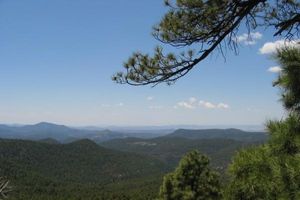
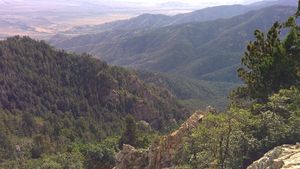
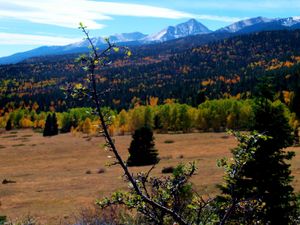
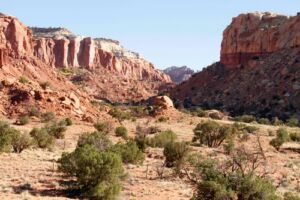
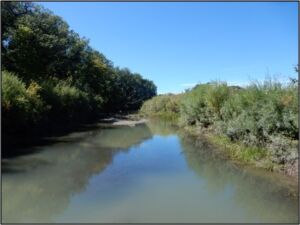
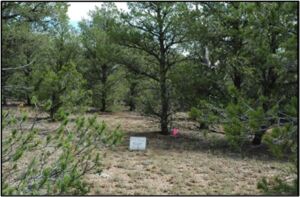
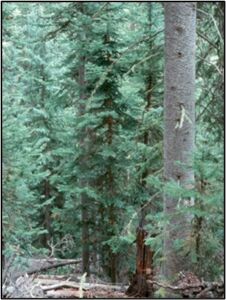
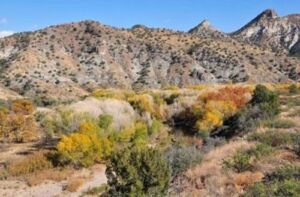
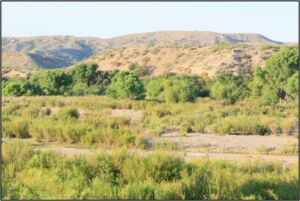
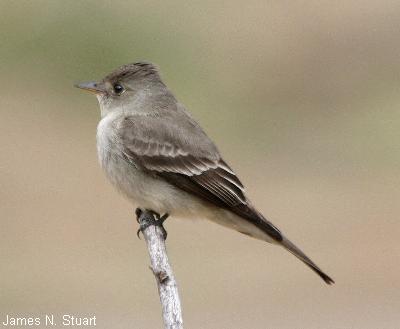
The Western Wood Pewee (Contopus sordidulus) is a medium-sized flycatcher (14-16 cm [5.5-6 in] long; 11-14 g [0.4-0.5 oz]) that is drab gray brown overall with two pale wingbars and a slight crest. The sides of the breast are dark, giving the impression of a vest. It hunts for flying insects from a perch, sallying out to catch them and returning to the perch. It breeds in open woodlands, forest edges, and forests near streams in western Canada, the western US, and parts of Mexico. It winters in South America. The Western Wood-Pewee will experience a high degree of climate exposure and has a high adaptive capacity. Overall, it has a Climate Change Vulnerability Index ranking of Less Vulnerable under both Representative Concentration Pathway (RCP) 4.5 and RCP 8.5 Scenarios. The Western Wood-Pewee’s climate change vulnerability is impacted by factors related to movement, life history, and evolutionary potential, which influence its ability to shift in space, persist in place, and respond to climate change impacts.