
Habitats
Conservation strategies for SGCN revolve around understanding and effectively managing the terrestrial and aquatic habitats they occupy. Habitat pages identify the ecoregions in which habitats are found, the threats they face, potentially relevant conservation actions to address these threats, and the SGCN with which they are associated.
SWAP Aquatic Habitats are:
- Perennial and ephemeral waters found in streams, lakes, reservoirs, marshes, and springs.
- Eight specific aquatic habitats in New Mexico that were mapped using the National Hydrography Dataset and aerial photography from the National Agriculture Imagery Program.
- Described in terms of persistence and temperature regimes following state standards.
- A priority because of New Mexico’s limited water supply and surrounding land use impacts.
SWAP Terrestrial Habitats are:
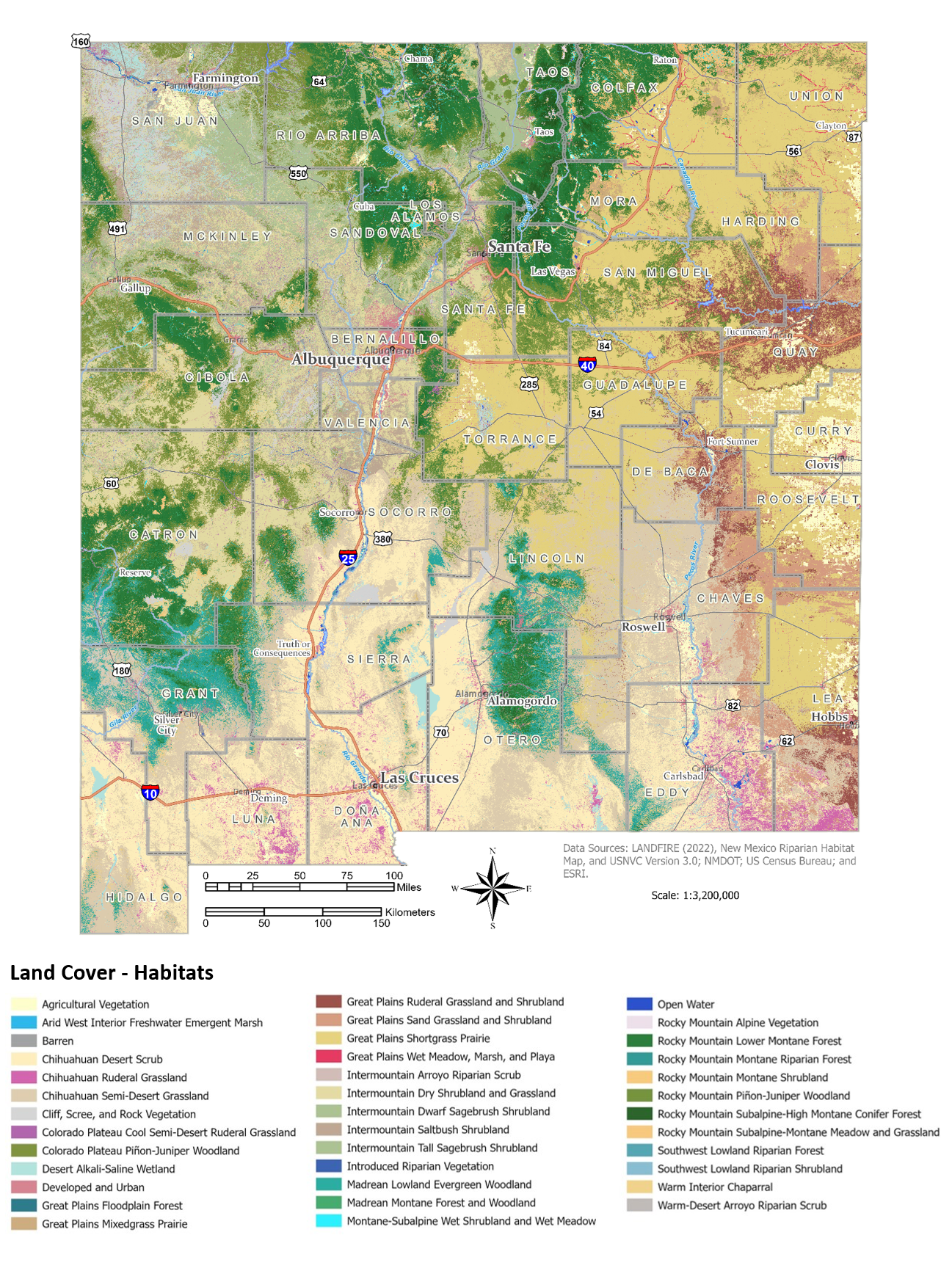
- Grouped into six general types with 34 finer-scale habitats.
- Mapped based on LANDFIRE and the New Mexico Riparian Habitat Map.
- Linked to the US National Vegetation Classification System (USNVC) Macrogroup descriptions to provide detailed information on composition and ecology.
- Tiered to reflect their habitat value and needs for conservation (Tier 1 through 4: most to least urgent; Tier 5: non-habitat) with riparian and wetland habitats ranking highest.