


| Scientific Name | Lepus townsendii campanius |
| Category | D |
| Taxon | Mammals |
| Climate Change Vulnerability Score | Less Vulnerable |
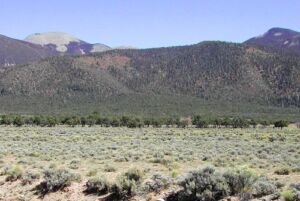
The White-tailed Jackrabbit (Lepus townsendii campanius) is a large (56-65 cm [22-26 in]; 3-4 kg [7-9 lb]) species in the hare family (Leporidae) native to western North America, from Canada to the central US. It is distinguished by long ears and powerful hind legs. It occupies open habitats, which allow its speed and agility to be ultilized to escape predators. It is herbivorous, and its diet consists of herbs, shrubs, and grasses. The White-tailed Jackrabbit will experience a high degree of climate exposure and has a moderately high adaptive capacity. Overall, it has a Climate Change Vulnerability Index ranking of Less Vulnerable under the Representative Concentration Pathway (RCP) 4.5 Scenario and Moderately Vulnerable under the RCP 8.5 Scenario. The White-tailed Jackrabbit’s climate change vulnerability is impacted by factors related to distribution and abiotic niche, which influence its ability to shift in space and respond to climate change impacts.