

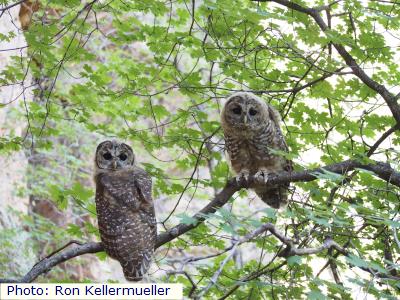
| Scientific Name | Strix occidentalis lucida |
| Category | I |
| Taxon | Birds |
| Climate Change Vulnerability Score | Highly Vulnerable |
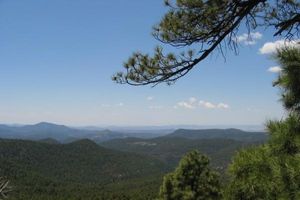
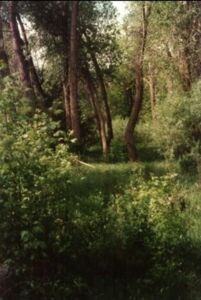
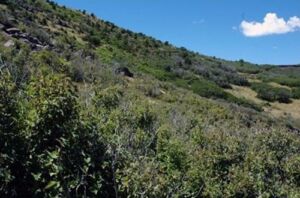
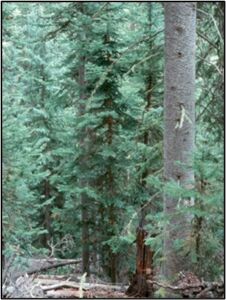
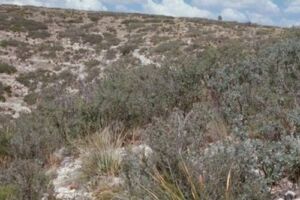
The Mexican Spotted Owl (Strix occidentalis lucida) is a large (47-48 cm [18.5-19 in]), brown owl with dark eyes; a spotted head, back, chest, and belly; and no ear tufts. It is distributed through the rugged mountainous regions of the southwestern US and into central Mexico. Its preferred habitat is closed-canopy, dense, multi-layered, uneven-aged, old-growth, mixed-conifer forests with numerous snags and downed woody material. Secondary habitats include steep, narrow canyons with cliffs and a perennial water source. Mammals make up the bulk of the owl’s diet. The Mexican Spotted Owl will experience a high degree of climate exposure and has a moderately low adaptive capacity. Overall, it has a Climate Change Vulnerability Index ranking of Highly Vulnerable under both Representative Concentration Pathway (RCP) 4.5 and RCP 8.5 Scenarios. The Mexican Spotted Owl’s climate change vulnerability is impacted by factors related to distribution, movement, life history, and abiotic niche, which influence its ability to shift in space, persist in place, and respond to climate change impacts. It also has documented or modeled responses to climate change that impact its vulnerability score.