

| Scientific Name | Aeorestes cinereus cinereus |
| Category | D |
| Taxon | Mammals |
| Climate Change Vulnerability Score | Moderately Vulnerable |
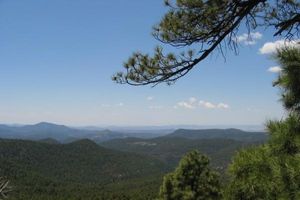
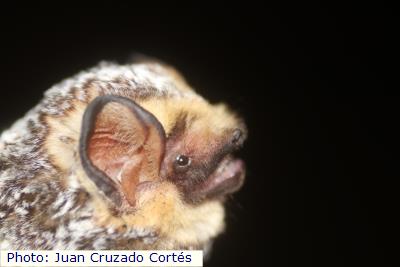
The Hoary Bat (Aeorestes cinereus cinereus) is a large (13-15 cm [5-6 in]) bat that lives primarily in the eastern US and northern Rocky Mountains, specifically in Montana, Nebraska, and South Dakota. It prefers to live in coniferous or broadleaf trees at the edges of clearings. Its diet consists primarily of moths. It also eats flies and beetles. It gets its name from its "hoary" or grayish-white hair. The Hoary Bat will experience a high degree of climate exposure and has a moderately high adaptive capacity. Overall, it has a Climate Change Vulnerability Index ranking of Moderately Vulnerable under both Representative Concentration Pathway (RCP) 4.5 and RCP 8.5 Scenarios. The Hoary Bat’s climate change vulnerability is impacted by factors related to movement and abiotic niche, which influence its ability to shift in space and respond to climate change impacts. It also has documented or modeled responses to climate change that impact its climate change vulnerability score.