

| Scientific Name | Neotamias canipes |
| Category | D |
| Taxon | Mammals |
| Climate Change Vulnerability Score | Less Vulnerable |
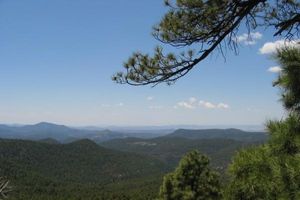
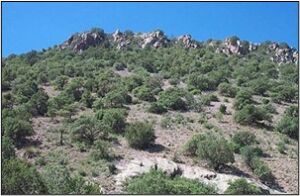
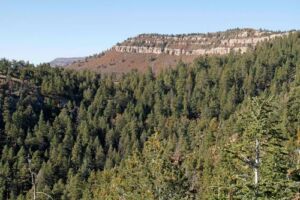
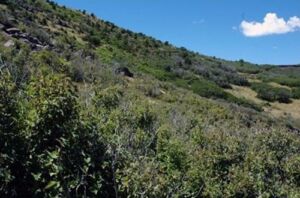
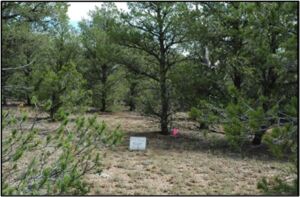
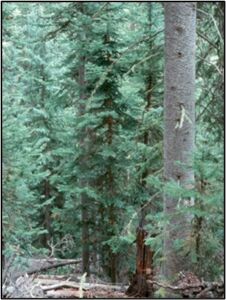
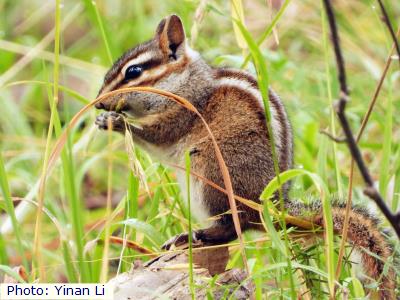
The Gray-footed Chipmunk (Neotamias canipes) is a small rodent (18-22 cm [7-9 in]) in the squirrel family (Sciuridae) that can be found in the mountainous portions of southern New Mexico and western Texas. It prefers areas with woodlands or rocky terrain. It is omnivorous, typically eating seeds, insects, nuts, and fruits. The Gray-footed Chipmunks is active during the day, and it is known for its agility while climbing trees. The Gray-footed Chipmunk will experience a high degree of climate exposure and has a high adaptive capacity. Overall, it has a Climate Change Vulnerability Index ranking of Less Vulnerable under both Representative Concentration Pathway (RCP) 4.5 and RCP 8.5 Scenarios. The Gray-footed Chipmunk’s climate change vulnerability is impacted by factors related to distribution and abiotic niche, which influence its ability to shift in space and respond to climate change impacts.