Skip to content

NEW MEXICO DEPARTMENT OF GAME AND FISH

New Mexico Conservation Information System

  • New Mexico Conservation Information System
  • BISON-M
  • NMERT
  • NM CHAT
  • Share with Wildlife

NEW MEXICO DEPARTMENT OF GAME AND FISH

  • New Mexico Conservation Information System
  • BISON-M
  • NMERT
  • NM CHAT
  • Share with Wildlife
New Mexico State Wildlife Action Plan LogoNew Mexico State Wildlife Action Plan Logo

State Wildlife Action Plan for New Mexico

New Mexico State Wildlife Action Plan
  • OVERVIEW
  • Species
    • Amphibians
    • Bees
    • Beetles
    • Birds
    • Crustaceans
    • Fish
    • Flies
    • Mammals
    • Molluscs
    • Moths and Butterflies
    • Reptiles
  • Ecoregions
    • Arizona/New Mexico Mountains
    • Chihuahuan Desert
    • Colorado Plateaus
    • High Plains and Tablelands
    • Madrean Archipelago
    • Southern Rocky Mountains
  • Habitats
    • Alpine and Montane Vegetation
    • Aquatic
    • Arroyo Riparian
    • Cliff, Scree & Rock Vegetation
    • Desert Grassland and Scrub
    • Plains-Mesa Grasslands< Back to Habitats List
    • Riparian Woodlands and Wetlands
  • Conservation Opportunity Areas
  • Threats and Conservation Actions
  • Monitoring
  • Climate Change
  • Related Resources
New Mexico State Wildlife Action Plan

New Mexico State Wildlife Action Plan

  • OVERVIEW
  • Species
    • Amphibians
    • Bees
    • Beetles
    • Birds
    • Crustaceans
    • Fish
    • Flies
    • Mammals
    • Molluscs
    • Moths and Butterflies
    • Reptiles
  • Ecoregions
    • Arizona/New Mexico Mountains
    • Chihuahuan Desert
    • Colorado Plateaus
    • High Plains and Tablelands
    • Madrean Archipelago
    • Southern Rocky Mountains
  • Habitats
    • Alpine and Montane Vegetation
    • Aquatic
    • Arroyo Riparian
    • Cliff, Scree & Rock Vegetation
    • Desert Grassland and Scrub
    • Plains-Mesa Grasslands< Back to Habitats List
    • Riparian Woodlands and Wetlands
  • Conservation Opportunity Areas
  • Threats and Conservation Actions
  • Monitoring
  • Climate Change
  • Related Resources

Ephemeral Catchments

Back to Habitats
Ephemeral Catchments
SWAP Habitat
Ephemeral Catchments
SWAP General Vegetation Type
Aquatic

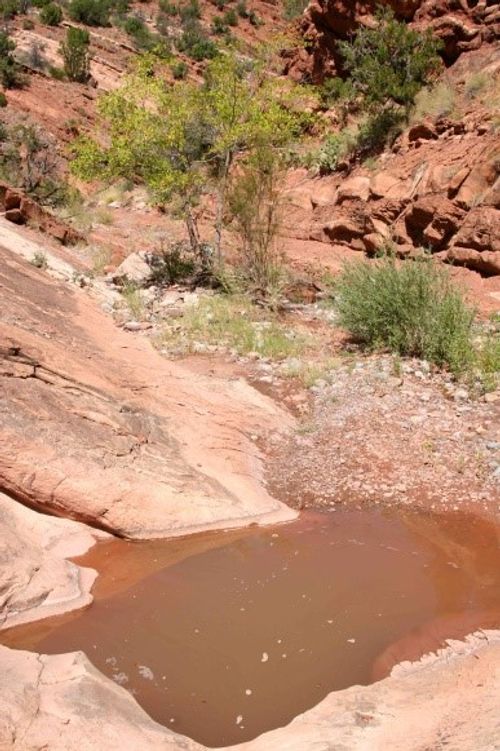
Ephemeral Catchments (playas, pools, tinajas, kettles, and tanks) are bodies of standing water formed in depressions, basins, or streams. A playa is an internally drained lake found in a sandy, salty, or muddy flat floor of an arid basin, usually filled with shallow water only after prolonged, heavy precipitation. A pool is formed in a small depression found in a marsh or on a floodplain. A tinaja is a pool in a seasonal stream that may support flora upon desiccation. A kettle is formed in a depression by melting ice blocks deposited in a glacial drift or in the glacier’s outwash plain. A tank is an artificial pond built to hold water for livestock and wildlife (sometimes including fish) that contains water for short and irregular periods of time, usually after a heavy precipitation event.


Species
Amphibians
Amphibians
Birds
Birds
Crustaceans
Crustaceans
Fish
Fish
Mammals
Mammals
Molluscs
Molluscs
Reptiles
Reptiles

SGCN Amphibians in the Ephemeral Catchments

Alkali Fairy Shrimp
Branchinecta mackini
American Bittern
Botaurus lentiginosus
American Dipper
Cinclus mexicanus unicolor
American Mink
Neogale vison
American Pipit
Anthus rubescens
Arid Land Ribbonsnake
Thamnophis proximus diabolicus
Arizona Toad
Anaxyrus microscaphus microscaphus
Arizona Treefrog
Hyla wrightorum
Arkansas River Shiner
Notropis girardi
Bald Eagle
Haliaeetus leucocephalus
Band-tailed Pigeon
Patagioenas fasciata
Bank Swallow
Riparia riparia riparia
Beavertail Fairy Shrimp
Thamnocephalus platyurus
Big Bend Slider
Trachemys gaigeae
Black-headed Grosbeak
Pheucticus melanocephalus
Black Swift
Cypseloides niger
Blanchard's Cricket Frog
Acris blanchardi
BLNWR cryptic species Amphipod
Gammarus sp.
This Species needs a photo. If you have one you would like to provide, please email it to virginia.seamster@dgf.nm.gov. Include the species name, your name and organization for the photo credit. Thank you!
Boreal Chorus Frog
Pseudacris maculata
Boreal Toad
Anaxyrus boreas boreas
Bowman's Fairy Shrimp
Streptocephalus thomasbowmani
This Species needs a photo. If you have one you would like to provide, please email it to virginia.seamster@dgf.nm.gov. Include the species name, your name and organization for the photo credit. Thank you!
Brine Shrimp
Artemia franciscana
Brown Pelican
Pelecanus occidentalis carolinensis
Bullock's Oriole
Icterus bullockii
Chiricahua Leopard Frog
Lithobates chiricahuensis
Clam Shrimp
Eulimnadia follisimilis
This Species needs a photo. If you have one you would like to provide, please email it to virginia.seamster@dgf.nm.gov. Include the species name, your name and organization for the photo credit. Thank you!
Clark's Grebe
Aechmophorus clarkii
Clark's Nutcracker
Nucifraga columbiana
Cliff Swallow
Petrochelidon pyrrhonota
Colorado Fairy Shrimp
Branchinecta coloradensis
Colorado Pikeminnow
Ptychocheilus lucius
Common Black Hawk
Buteogallus anthracinus anthracinus
Common Nighthawk
Chordeiles minor
Cylindrical Cyst Clam Shrimp
Eulimnadia cylindrova
This Species needs a photo. If you have one you would like to provide, please email it to virginia.seamster@dgf.nm.gov. Include the species name, your name and organization for the photo credit. Thank you!
Desert Fairy Shrimp
Streptocephalus dorothae
This Species needs a photo. If you have one you would like to provide, please email it to virginia.seamster@dgf.nm.gov. Include the species name, your name and organization for the photo credit. Thank you!
Desert Tadpole Shrimp
Triops newberryi
Diversity Clam Shrimp
Eulimnadia diversa
This Species needs a photo. If you have one you would like to provide, please email it to virginia.seamster@dgf.nm.gov. Include the species name, your name and organization for the photo credit. Thank you!
Dumont's Fairy Shrimp
Streptocephalus henridumontis
This Species needs a photo. If you have one you would like to provide, please email it to virginia.seamster@dgf.nm.gov. Include the species name, your name and organization for the photo credit. Thank you!
Elegant Trogon
Trogon elegans canescens
Fuzzy Cyst Clam Shrimp
Eulimnadia antlei
This Species needs a photo. If you have one you would like to provide, please email it to virginia.seamster@dgf.nm.gov. Include the species name, your name and organization for the photo credit. Thank you!
Golden Eagle
Aquila chrysaetos canadensis
Greater Yellowlegs
Tringa melanoleuca
Great Plains Fairy Shrimp
Streptocephalus texanus
Green-tailed Towhee
Pipilo chlorurus
Horned Lark
Eremophila alpestris
Killdeer
Charadrius vociferus vociferus
Knobblip Fairy Shrimp
Eubranchipus bundyi
Lazuli Bunting
Passerina amoena
Least Tern
Sternula antillarum athalassos
Long-billed Curlew
Numenius americanus americanus
Long-billed Dowitcher
Limnodromus scolopaceus
Lowland Leopard Frog
Lithobates yavapaiensis
Lynch Tadpole Shrimp
Lepidurus lemmoni
Mackin Fairy Shrimp
Streptocephalus mackini
Mexican Beavertail Fairy Shrimp
Thamnocephalus mexicanus
Mountain Plover
Charadrius montanus
Narrow-headed Gartersnake
Thamnophis rufipunctatus
Neotropic Cormorant
Phalacrocorax brasilianus
Noel's Amphipod
Gammarus desperatus
North American River Otter
Lontra canadensis
Northern Harrier
Circus hudsonius
Northern Leopard Frog
Lithobates pipiens
Northern Mexican Gartersnake
Thamnophis eques megalops
Northern Rough-winged Swallow
Stelgidopteryx serripennis
Packard's Fairy Shrimp
Branchinecta packardi
Peregrine Falcon
Falco peregrinus
Piping Plover
Charadrius melodus circumcinctus
This Species needs a photo. If you have one you would like to provide, please email it to virginia.seamster@dgf.nm.gov. Include the species name, your name and organization for the photo credit. Thank you!
Plains Gartersnake
Thamnophis radix
Plains Leopard Frog
Lithobates blairi
Playa Clam Shrimp
Leptestheria compleximanus
Prairie Falcon
Falco mexicanus
Rio Grande Leopard Frog
Lithobates berlandieri
Savannah Sparrow
Passerculus sandwichensis
Scud
Hyalella azteca
Short Finger Clam Shrimp
Lynceus brevifrons
This Species needs a photo. If you have one you would like to provide, please email it to virginia.seamster@dgf.nm.gov. Include the species name, your name and organization for the photo credit. Thank you!
Sitting Bull Spring cryptic species Amphipod
Gammarus sp.
This Species needs a photo. If you have one you would like to provide, please email it to virginia.seamster@dgf.nm.gov. Include the species name, your name and organization for the photo credit. Thank you!
Snowy Plover
Charadrius nivosus
Sonoran Desert Toad
Incilius alvarius
Sonoran Mud Turtle
Kinosternon sonoriense sonoriense
Southwestern Willow Flycatcher
Empidonax traillii extimus
Spotted Sandpiper
Actitis macularius
Steller's Jay
Cyanocitta stelleri macrolopha
Sublette's Fairy Shrimp
Phallocryptis sublettei
Texan Clam Shrimp
Eulimnadia texana
This Species needs a photo. If you have one you would like to provide, please email it to virginia.seamster@dgf.nm.gov. Include the species name, your name and organization for the photo credit. Thank you!
Tularosa Springsnail
Juturnia tularosae
This Species needs a photo. If you have one you would like to provide, please email it to virginia.seamster@dgf.nm.gov. Include the species name, your name and organization for the photo credit. Thank you!
Versatile Fairy Shrimp
Branchinecta lindahli
Violet-green Swallow
Tachycineta thalassina lepida
Western Grebe
Aechmophorus occidentalis
Western Kingbird
Tyrannus verticalis
Western Narrow-mouthed Toad
Gastrophryne olivacea
Western River Cooter
Pseudemys gorzugi
Western Sandpiper
Calidris mauri
White-throated Swift
Aeronautes saxatalis saxatalis
Wilson's Warbler
Cardellina pusilla
Yellow-bellied Water Snake
Nerodia erythrogaster transversa
Yellow-billed Cuckoo
Coccyzus americanus occidentalis

Threats and Conservation Actions

Result for: All
Natural System Modifications
Consider appropriate policies to protect the biotic and abiotic resources of ephemeral aquatic ecosystems and to support higher water quality standards for wetlands. Potential collaborators: NMED.

Natural System Modifications
Create public awareness of the function, values, services, and products of ephemeral aquatic ecosystems. Potential collaborators: BLM, NPS, USFS, USFWS, SLO, non-profit organizations.

Invasive and Other Problematic Species, Genes, and Diseases
Develop and implement protocols to detect, reduce, or eradicate non-native and invasive species in ephemeral aquatic habitats while encouraging repopulation by native species. When removing non-native riparian plants, prioritize removal of monoculture stands (e.g., Johnson et al. 2018b) and ensure that sufficient native riparian vegetation is locally available to SGCN and that local hydrological conditions support native vegetation regrowth. Stage and balance non-native plant removal and native habitat restoration over time, to avoid rapid loss of exotic woody riparian habitats for wildlife until native habitats can be developed (Sogge et al. 2013). Potential collaborators: BLM, DOD, DOE, NPS, NRCS, USFS, USFWS, NMDA, NMED, SLO, universities, private landowners, Tribal natural-resource managers.

Natural System Modifications
Develop and implement survey and monitoring protocols for aquatic and semi-aquatic SGCN in ephemeral habitats that currently are not monitored. Potential collaborators: BLM, DOD, NPS, USFS, USFWS, SLO, universities, Tribal natural-resource managers.

Natural System Modifications
Develop and maintain a database of the location and status of ephemeral aquatic habitats. Use standardized monitoring and survey methods and satellite imagery to classify and track gains and losses of habitat. Potential collaborators: NMED, universities, non-profit organizations.

Natural System Modifications
Document, monitor, protect, enhance, and restore ephemeral aquatic ecosystems (catchments, marshes/cienegas/springs, playas) to minimize the loss of these water bodies and any surrounding wetlands in New Mexico. Develop monitoring protocols and conservation actions for ephemeral aquatic habitats and associated SGCN. In particular, focus efforts on wetland-obligate species that use these habitats for all or part of their life cycle or during migration. Potential collaborators: BLM, NRCS, USFS, NMED, SLO, universities, non-profit organizations, private landowners.

Natural System Modifications
Employ and support incentive programs, including those specifically designed for wetland conservation, to protect, enhance, and restore aquatic habitats. Potential collaborators: NRCS, private landowners.

Natural System Modifications
Examine and quantify how geographically isolated wetlands and wetland complexes contribute hydrologically, chemically, and biologically to other waters. Includes assessing how they contribute to surface and groundwater quality and how they differ in terms of biodiversity from interconnected wetland complexes. Potential collaborators: BLM, DOD NPS, USFS, USFWS, NMED, SLO, universities, non-profit organizations.

Natural System Modifications
Identify SGCN within ephemeral aquatic ecosystems and isolated wetlands that lack federal protection under the Clean Water Act and identify actions to protect these SGCN and their habitats. Potential collaborators: BLM, DOD, NPS, USFS, USFWS, NMED, SLO, universities, non-profit organizations, Tribal natural-resource managers.

Natural System Modifications
Identify at-risk populations of SGCN that utilize ephemeral aquatic habitats and develop actions to conserve them. Potential collaborators: BLM, DOD, NPS, USFS, USFWS, SLO, universities, Tribal natural-resource managers.

Natural System Modifications
Identify populations of aquatic, semi-aquatic, and riparian SGCN in ephemeral aquatic ecosystems that become isolated during dry periods. Work to protect interconnected wetland habitats and to connect currently isolated wetland patches to limit geographic isolation of wetland ecosystems that might lead to biodiversity loss. Potential collaborators: BLM, DOD, NPS, USFS, USFWS, NMBGMR, NMED, SLO, universities.

Invasive and Other Problematic Species, Genes, and Diseases
Investigate the current distribution of invasive and problematic species and diseases with special emphasis on their impact to aquatic SGCN and associated ephemeral aquatic habitats. Identify ways to minimize the spread of these species and diseases. Potential collaborators: BLM, DOD, DOE, NPS, NRCS, USFS, USFWS, NMDA, NMED, SLO, universities, private landowners, Tribal natural-resource managers.

Natural System Modifications
Investigate the ecology of threats to and environmental conditions that limit SGCN that inhabit ephemeral aquatic habitats. Potential collaborators: BLM, NPS, USFS, USFWS, SLO, universities, Tribal natural-resource managers.

Natural System Modifications
Locate and protect SGCN that occur in high elevation, ephemeral aquatic ecosystems. Potential collaborators: USFS, private landowners.

Invasive and Other Problematic Species, Genes, and Diseases
Maintain isolation between ephemeral aquatic habitats in cases where the presence of disease or invasive species in one habitat threatens to spread into neighboring, unaffected habitats. Potential collaborators: BLM, DOD, DOE, NPS, USFS, USFWS, SLO, universities, private landowners, Tribal natural-resource managers.

Natural System Modifications
Re-connect ephemeral stream and wetland habitats that have been fragmented by roads, culverts, and other man-made structures that isolate and preclude movement of aquatic and semi-aquatic SGCN. Does not include structures that serve a beneficial role for wildlife (e.g., native fish barriers). Re-establish SGCN in areas where extirpated and appropriate. Potential collaborators: BLM, NPS, USFS, NMDOT, private landowners.

Invasive and Other Problematic Species, Genes, and Diseases
Restore aquatic SGCN reduced by the presence of non-native species in ephemeral aquatic habitats. Potential collaborators: BLM, DOD, NPS, USFS, USFWS, SLO, universities, private landowners, Tribal natural-resource managers.

Related Resources

  • Aquatic Habitats section in SWAP document
Natural Heritage New Mexico
  • Contact Us
  • Our Mission
  • Work With Us
  • Operation Game Thief
  • Contact Us
  • Our Mission
  • Work With Us
  • Operation Game Thief

©2026 • New Mexico State Wildlife Action Plan • All Rights Reserved • Website by Delta Systems

Page load link
Go to Top