

| Scientific Name | Anthus rubescens |
| Category | D |
| Taxon | Birds |
| Climate Change Vulnerability Score | Moderately Vulnerable |
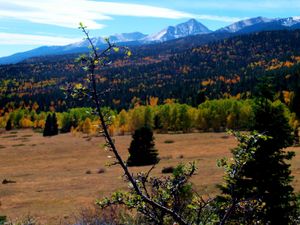
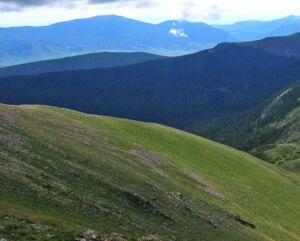
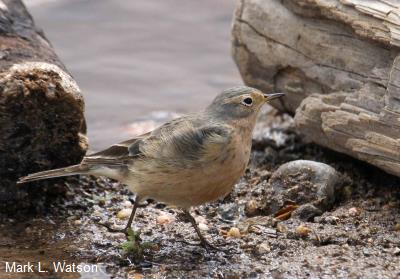
The American Pipit (Anthus rubescens) is a small (14-17 cm [5.5-7 in] long; 19-26 g [0.7-0.9 oz]), light-colored bird that is brownish or grayish above, lighter below, and has a long dark bill. They forage on the ground in meadows or wetlands for insects and their larvae, marine worms, crustaceans, and other invertebrates. It winters in the southern US and Mexico and breeds in the high mountains of the western US, Alaska, and western and northern Canada. The American Pipit will experience a high degree of climate exposure and has a high adaptive capacity. Overall, it has a Climate Change Vulnerability Index ranking of Moderately Vulnerable under both Representative Concentration Pathway (RCP) 4.5 and RCP 8.5 Scenarios. The American Pipit’s climate change vulnerability is impacted by factors related to movement and abiotic niche, which influence its ability to shift in space and respond to climate change impacts. It also has documented or modeled responses to climate change that impact its vulnerability score.