

| Scientific Name | Cardellina pusilla |
| Category | L |
| Taxon | Birds |
| Climate Change Vulnerability Score | Less Vulnerable |
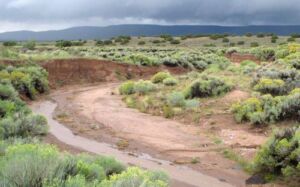
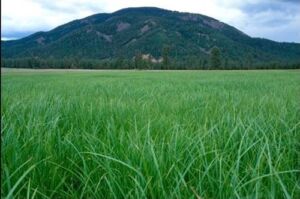
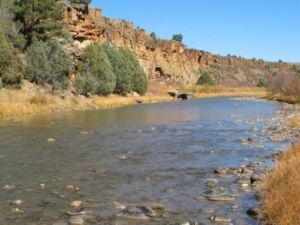
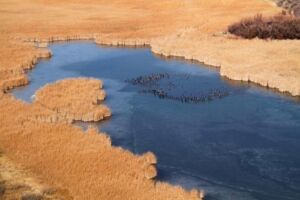
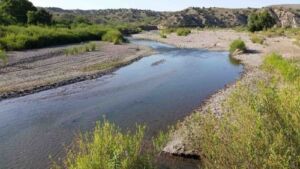
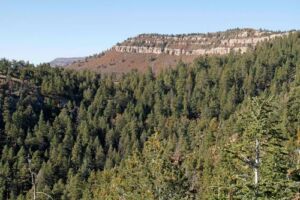
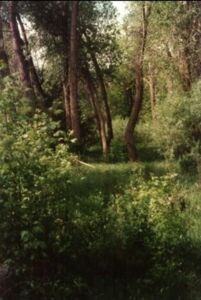
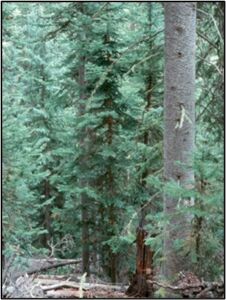
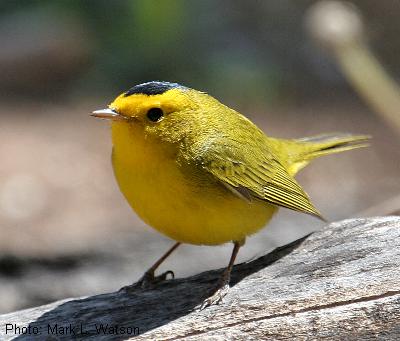
The Wilson's Warbler (Cardellina pusilla) is a small warbler (10-12 cm [4-5 in] long; 5-10 g [0.2-0.4 oz]) with olivey upperparts. Males have deep black caps and yellow faces, throats, and bellies. Females have yellow throats and yellow above the eye and are otherwise olive colored. It forages for small insects on leaves and twigs in shrubby thickets and the understories of forests, especially near streams. It breeds throughout Canada, the northwestern US and mountain areas south into New Mexico. It winters in Mexico. The Wilson’s Warbler will experience a high degree of climate exposure and has a high adaptive capacity. Overall, it has a Climate Change Vulnerability Index ranking of Less Vulnerable under both Representative Concentration Pathway (RCP) 4.5 and RCP 8.5 Scenarios. The Wilson’s Warbler’s climate change vulnerability is impacted by factors related to movement and life history, which influence its ability to shift in space and persist in place.