
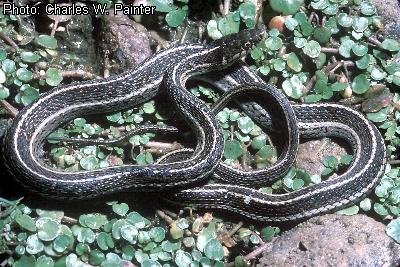
| Scientific Name | Thamnophis eques megalops |
| Category | L |
| Taxon | Reptiles |
| Climate Change Vulnerability Score | Extremely Vulnerable |
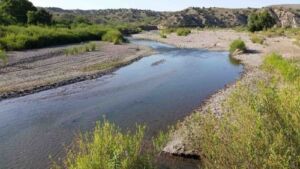
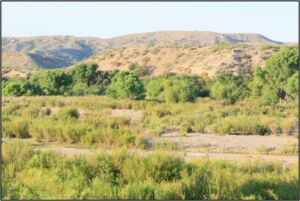
The Northern Mexican Gartersnake (Thamnophis eques megalops) is a medium-sized (1 m [3 ft] total length) gartersnake (Thamnophis spp.) that is never far from water. It forages in and around streams and eats fish, amphibians, invertebrates, and other small animals. Its range includes disjunct populations in central and southeastern Arizona, southwestern New Mexico, and the highlands of western and southern Mexico. The Northern Mexican Gartersnake will experience a high degree of climate exposure and has a moderately low adaptive capacity. Overall, it has a Climate Change Vulnerability Index ranking of Extremely Vulnerable under both Representative Concentration Pathway (RCP) 4.5 and RCP 8.5 Scenarios. The Northern Mexican Gartersnake’s climate change vulnerability is impacted by factors related to distribution, demography, evolutionary potential, and abiotic niche, which influence its ability to shift in space, persist in place, and respond to climate change impacts. It is also impacted by barriers, land-use changes, and other anthropogenic and biologic factors that could increase the effects of climate change.