

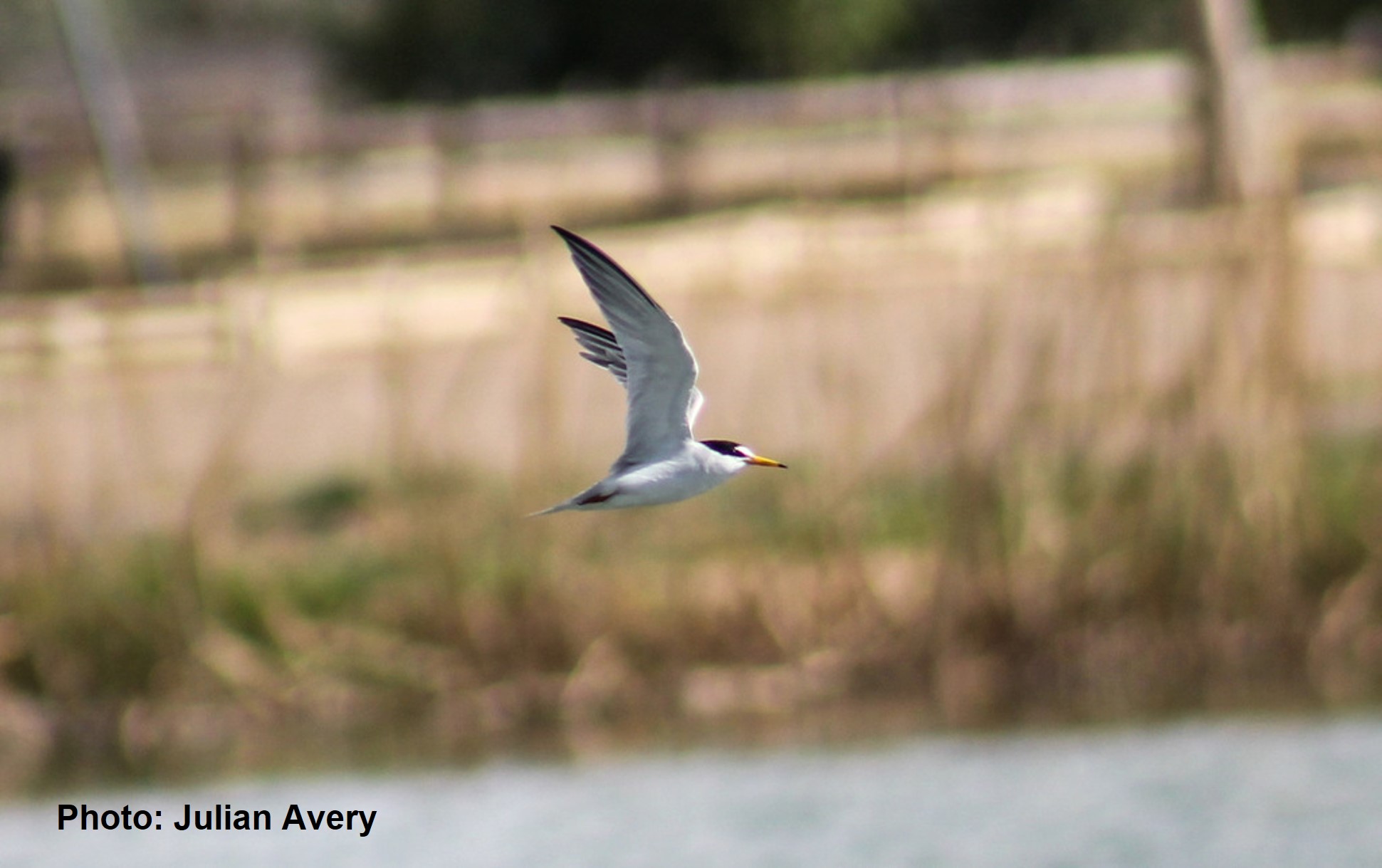
| Scientific Name | Sternula antillarum athalassos |
| Category | L |
| Taxon | Birds |
| Climate Change Vulnerability Score | Highly Vulnerable |
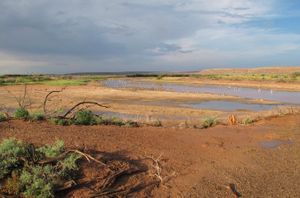
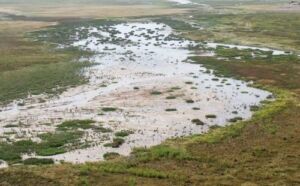
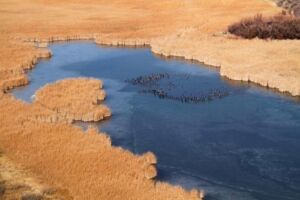
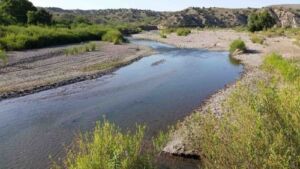
The Least Tern (Sternula antillarum athalassos) is the smallest (21-23 cm [8-9 in]) North American tern and breeds in coastal areas of California, portions of the Atlantic and Gulf Coasts, and islands throughout the Caribbean. The interior population of least terns consists of small, remnant colonies throughout their former range. The tern has been observed to breed at Bitter Lake National Wildlife Refuge in southeastern New Mexico. It nests on salt flats, sandbars, and sand dunes near water and eats fish and aquatic invertebrates. The Least Tern will experience a high degree of climate exposure and has a moderately low adaptive capacity. Overall, it has a Climate Change Vulnerability Index ranking of Highly Vulnerable under both Representative Concentration Pathway (RCP) 4.5 and RCP 8.5 Scenarios. The Least Tern’s climate change vulnerability is impacted by factors related to distribution and movement, which influence its ability to shift in space. It also has documented or modeled responses to climate change that impact its vulnerability score.