
| Scientific Name | Tringa melanoleuca |
| Category | D |
| Taxon | Birds |
| Climate Change Vulnerability Score | Less Vulnerable |
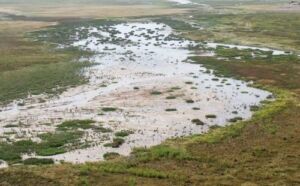
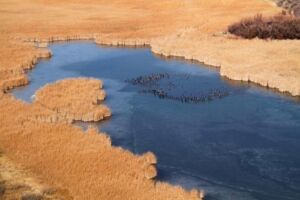
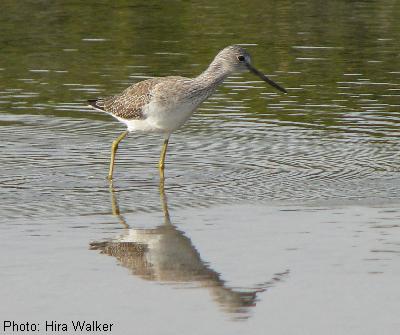
The Greater Yellowlegs (Tringa melanoleuca) is a somewhat large shorebird (29-33 cm [11-13 in] long; 128-219 g [4.5-8 oz]) with long yellow legs, a long neck, a white belly, and darkly mottled upperparts. It forages for aquatic invertebrates in marshes and mudflats. It breeds in Canada, migrates through most of the US, and winters from Mexico to South America. The Greater Yellowlegs will experience a high degree of climate exposure and has a high adaptive capacity. Overall, it has a Climate Change Vulnerability Index ranking of Less Vulnerable under both Representative Concentration Pathway (RCP) 4.5 and RCP 8.5 Scenarios. The Greater Yellowleg’s climate change vulnerability is impacted by factors related to distribution, movement, and abiotic niche, which influence its ability to shift in space and respond to climate change impacts. It also has documented or modeled responses to climate change that impact its vulnerability score.