
| Scientific Name | Buteogallus anthracinus anthracinus |
| Category | D |
| Taxon | Birds |
| Climate Change Vulnerability Score | Highly Vulnerable |
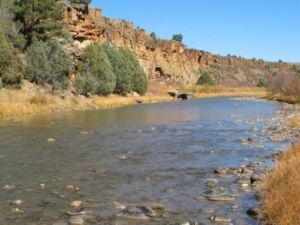
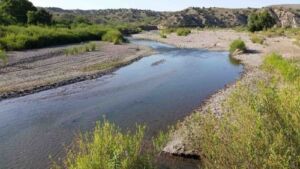
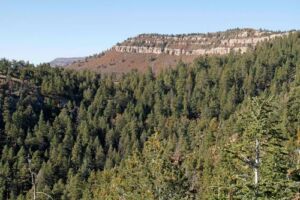
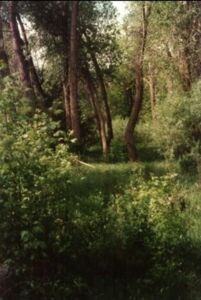
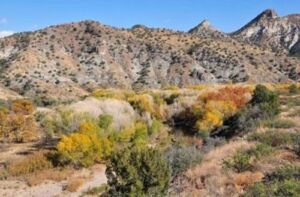
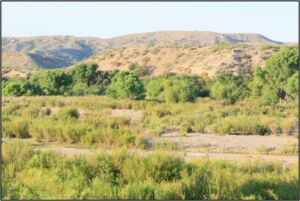
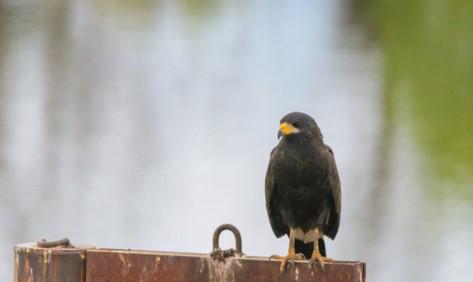
The Common Black Hawk (Buteogallus anthracinus anthracinus) is a medium-sized (53 cm [21 in]) hawk that is dark gray to black in color with a distinctive white band across the tail and white tail tip. Most of the population is in Central America, but its range extends into southern Arizona, New Mexico, Texas, and Utah where it lives near water. It primarily eats frogs, fish, crabs, and reptiles but is an opportunistic feeder. The Common Black Hawk will experience a high degree of climate exposure and has a moderately low adaptive capacity. Overall, it has a Climate Change Vulnerability Index ranking of Highly Vulnerable under both Representative Concentration Pathway (RCP) 4.5 and RCP 8.5 Scenarios. The Common Black Hawk’s climate change vulnerability is impacted by factors related to distribution, movement, and abiotic niche, which influence its ability to shift in space and respond to climate change impacts. It also has documented or modeled responses to climate change that impact its vulnerability score.