

| Scientific Name | Pheucticus melanocephalus |
| Category | D |
| Taxon | Birds |
| Climate Change Vulnerability Score | Less Vulnerable |
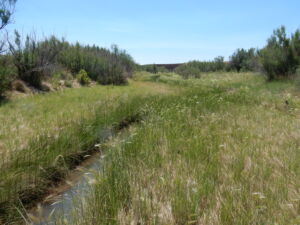
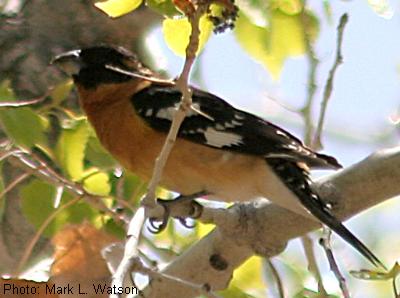
The Black-headed Grosbeak (Pheucticus melanocephalus) is a chunky songbird (18-19 cm [7-7.5 in] long; 35-49 g [1-2 oz]) with a very thick bill. Males are burnt orange below and around the entire neck, black on the head and face, and black with white flashes on the wings and tails. Females are brownish above and light with an orange wash below and have a chunky bill and a white line over the eye. It forages for seeds, insects, snails, and fruit in edge habitats near water. It occurs throughout the western US and winters in Mexico. The Black-headed Grosbeak will experience a high degree of climate exposure and has a moderately high adaptive capacity. Overall, it has a Climate Change Vulnerability Index ranking of Less Vulnerable under both Representative Concentration Pathway (RCP) 4.5 and RCP 8.5 Scenarios. The Black-headed Grosbeak’s climate change vulnerability is impacted by factors related to movement, life history, and abiotic niche, which influence its ability to shift in space, persist in place, and respond to climate change impacts.