
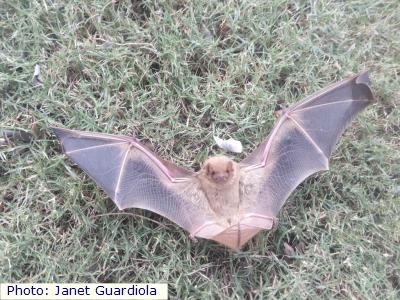
| Scientific Name | Dasypterus xanthinus |
| Category | D |
| Taxon | Mammals |
| Climate Change Vulnerability Score | Less Vulnerable |
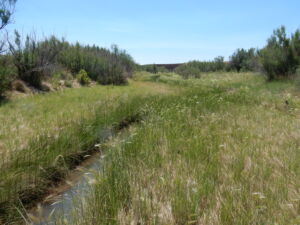
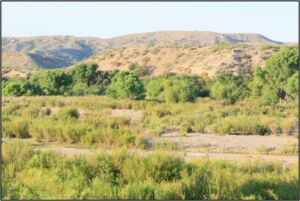
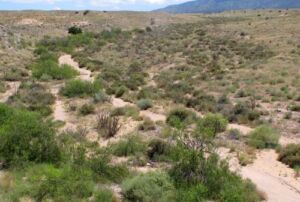
The Western Yellow Bat (Dasypterus xanthinus) is a medium-sized (13 cm [5 in]), buffy-yellow bat that is found from southwestern New Mexico, around Guadalupe Canyon, to southern California and south through Mexico. It is found in riparian areas and piñon (Pinus spp.)-juniper (Juniperus spp.) woodlands. It prefers to roost in trees and may travel more than 22 km (14 mi) from its roosts. The Western Yellow Bat will experience a high degree of climate exposure and has a moderately high adaptive capacity. Overall, it has a Climate Change Vulnerability Index ranking of Less Vulnerable under the Representative Concentration Pathway (RCP) 4.5 Scenario and Moderately Vulnerable under the RCP 8.5 Scenario. The Western Yellow Bat’s climate change vulnerability is impacted by factors related to movement, evolutionary potential, and abiotic niche, which influence its ability to shift in space and respond to climate change impacts.