

| Scientific Name | Phainopepla nitens lepida |
| Category | D |
| Taxon | Birds |
| Climate Change Vulnerability Score | Less Vulnerable |
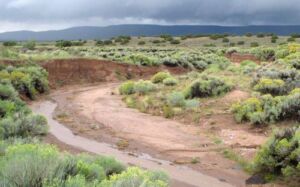
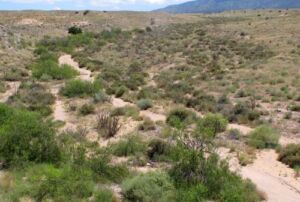
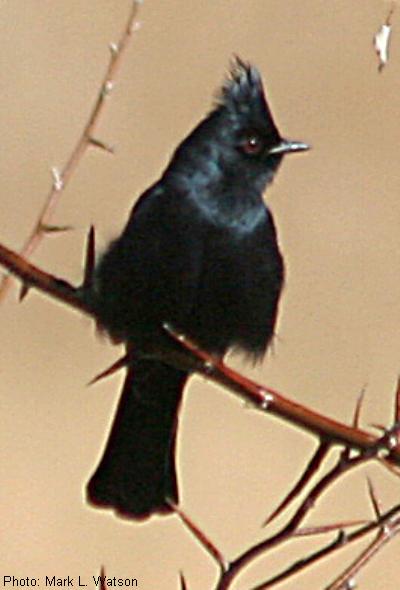
The Phainopepla (Phainopepla nitens lepida) is a long, slender bird (18-21 cm [7-8 in] long; 17.9-28.1 g [0.6-1 oz]) with a tall crest, red eyes, and white wing patches in flight. Males are black and females are dark gray. It eats fruit and flying insects in desert washes with mesquite, acacia, paloverde (Parkinsonia spp.), smoketrees, and ironwood trees. It occurs in the southwestern US and Mexico. The Phainopepla will experience a high degree of climate exposure and has a high adaptive capacity. Overall, it has a Climate Change Vulnerability Index ranking of Less Vulnerable under both Representative Concentration Pathway (RCP) 4.5 and RCP 8.5 Scenarios. The Phainopepla’s climate change vulnerability is impacted by factors related to life history and abiotic niche, which influence its ability to persist in place and respond to climate change impacts.