
| Scientific Name | Anaxyrus boreas boreas |
| Category | F |
| Taxon | Amphibians |
| Climate Change Vulnerability Score | Moderately Vulnerable |
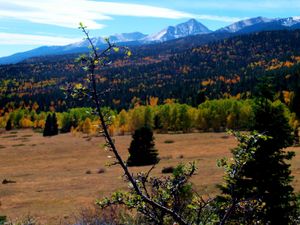
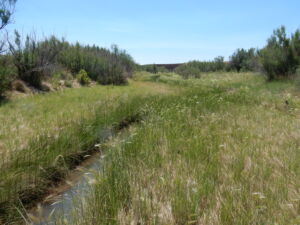
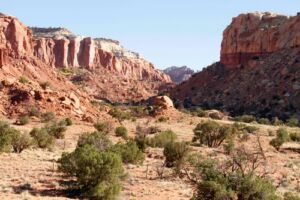
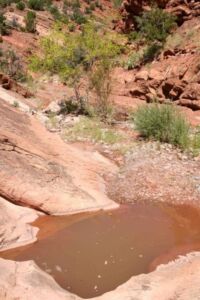
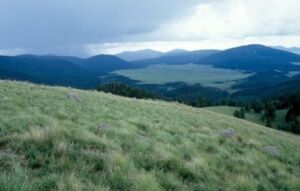
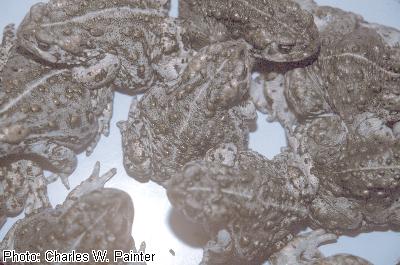
The Boreal Toad (Anaxyrus boreas boreas) is a medium-sized (6-10 cm [2-4 in]) toad with dry, warty skin. It is distributed along western North America from southern Alaska to Baja California. In New Mexico, it is only found in north-central Rio Arriba County at elevations ranging from 2,774-3,200 m (9,101-10,499 ft) in the San Juan Mountains at Canjilon, Lagunitas, and Trout Lakes. It inhabits a wide range of aquatic habitats from desert springs to mountain wetlands and will occur at elevations as high as 3,658 m (12,001 ft). Because it lacks vocal sacs, it does not call but will occasionally make small chirps, especially when in duress. The Boreal Toad will experience a high degree of climate exposure and has a moderately low adaptive capacity. Overall, it has a Climate Change Vulnerability Index ranking of Moderately Vulnerable under the Representative Concentration Pathway (RCP) 4.5 Scenario and Extremely Vulnerable under the RCP 8.5 Scenario. The Boreal Toad’s climate change vulnerability is impacted by factors related to distribution, movement, life history, evolutionary potential, and abiotic niche, which influence its ability to shift in space, persist in place, and respond to climate change impacts. It is also impacted by land-use changes that could increase the effects of climate change.