
| Scientific Name | Perimyotis subflavus |
| Category | F |
| Taxon | Mammals |
| Climate Change Vulnerability Score | Highly Vulnerable |
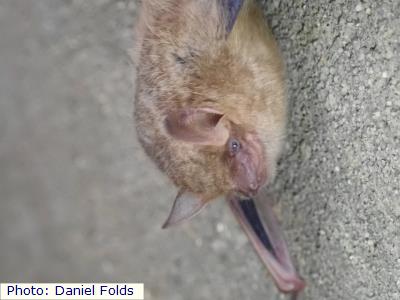
The Tri-colored Bat (Perimyotis subflavus) is a small bat (7-9 cm [3-3.5 in]; 5–8 g [0.2-0.3 oz]), named for its unique fur which is dark at the base, yellow in the middle, and dark at the tip. It is found in forests, woodlands, and areas with direct water access. The Tri-colored Bat is insecivorous, feeding primarily on moths, beetles, and other flying insects. The Tricolored Bat will experience a high degree of climate exposure and has a moderately high adaptive capacity. Overall, it has a Climate Change Vulnerability Index ranking of Highly Vulnerable under both Representative Concentration Pathway (RCP) 4.5 and RCP 8.5 Scenarios. The Tricolored Bat’s climate change vulnerability is impacted by factors related to evolutionary potential and abiotic niche, which influence its ability to respond to climate change impacts. It is also impacted by land-use changes and other anthropogenic and biologic factors that could increase the effects of climate change. It also has documented or modeled responses to climate change that impact its climate change vulnerability score.