

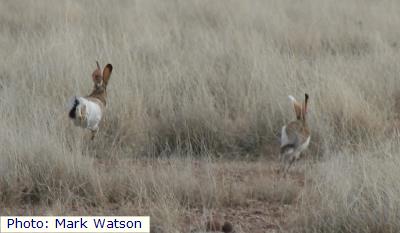
| Scientific Name | Lepus callotis gaillardi |
| Category | I |
| Taxon | Mammals |
| Climate Change Vulnerability Score | Less Vulnerable |
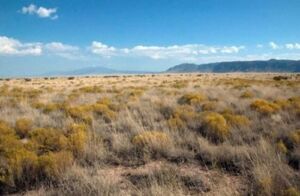
The White-sided Jackrabbit (Lepus callotis gaillardi) is a large (approximately 0.6 m [2 ft] long) species in the hare family (Leporidae) that occurs in the Animas Valley and historically within parts of the Playas Valley, both in southern Hidalgo County, New Mexico, and south through the Mexican Plateau to Jalisco, Mexico. It is a grassland-obligate species, avoiding hilly or shrubby habitats. This jackrabbit is threatened by shrub encroachment upon grassy habitat; heavy border-patrol traffic through the heart of its New Mexico range may also result in some direct mortality. The White-sided Jackrabbit will experience a high degree of climate exposure and has a high adaptive capacity. Overall, it has a Climate Change Vulnerability Index ranking of Less Vulnerable under both Representative Concentration Pathway (RCP) 4.5 and RCP 8.5 Scenarios. The White-sided Jackrabbit’s climate change vulnerability is impacted by factors related to distribution and life history, which influence its ability to shift in space and persist in place.