

| Scientific Name | Meda fulgida |
| Category | F |
| Taxon | Fish |
| Climate Change Vulnerability Score | Highly Vulnerable |
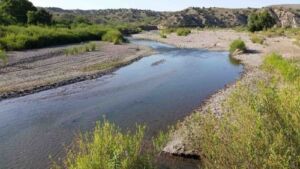
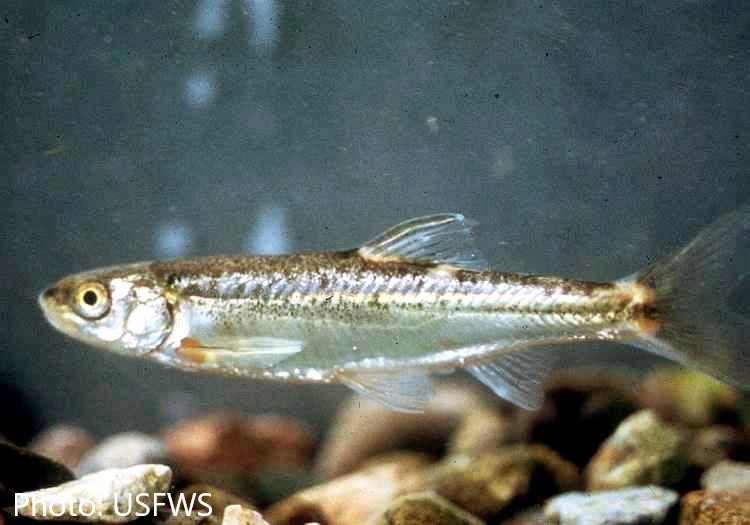
The Spikedace (Meda fulgida) is a small (up to 8 cm [3 in]) fish that persists in a restricted distribution in the upper Gila River basin of Arizona and New Mexico and is being actively managed through population augmentations and translocations. It is found in sand- and gravel-bottomed, shallow, clear streams with permanently flowing water. The primary threat to this species is thought to be non-native fishes that compete with or prey on the Spikedace. The Spikedace will experience a high degree of climate change exposure and has a low adaptive capacity. Overall, it has a Climate Change Vulnerability Index ranking of Highly Vulnerable under both Representative Concentration Pathway (RCP) 4.5 and RCP 8.5 Scenarios. The Spikedace’s climate change vulnerability is impacted by factors related to distribution, movement, life history, evolutionary potential, and abiotic niche, which influence its ability to shift in space, persist in place, and respond to climate change impacts.