| Scientific Name | Oreohelix strigosa depressa |
| Category | D |
| Taxon | Molluscs |
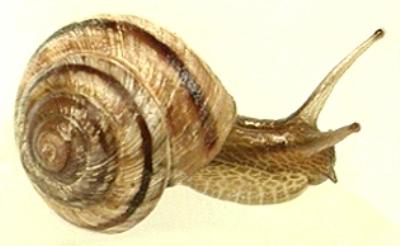
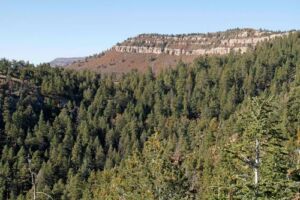
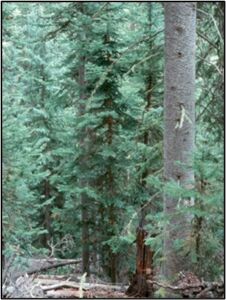
The Rocky Mountainsnail (Oreohelix strigosa depressa) is a small (1.5-2.5 cm [0.6-1 in]) land snail that can be found throughout most of northern New Mexico. This snail thrives in moist environments with plenty of plant cover. It feeds on decaying plant matter and uses leaves and other plants for shade.
Threats and Conservation Actions
Result for:
All
Climate Change and Severe Weather
Assess the synergistic effects between climate change and other threats to SGCN and their habitats (e.g., Friggens et al. 2019, Parks et al. 2019). Incorporate appropriate climate adaptation strategies and frameworks into projects designed to address these synergistic effects. This may include enhancing connectivity (CEQ 2023), facilitating a species’ innate adaptive capacity (Thurman et al. 2022), enhancing genetic diversity (Powell 2023), considering local adaptation (Meek et al. 2023), or considering whether it is most appropriate to resist, accept, or direct ecosystem transformation (Lynch et al. 2021, Stevens et al. 2021). Projects should acknowledge ecosystem dynamism and incorporate indigenous knowledge (e.g., Roos et al. 2022, Eisenberg et al. 2024), nature-based solutions (Warnell et al. 2023), and experimentation (Guiterman et al. 2022) when appropriate. Potential collaborators: BLM, NPS, USFS, USFWS, USGS, universities, Tribal natural-resource managers.
Climate Change and Severe Weather
Collaborate with interested and willing land managers and private landowners to designate protected areas or implement conservation easements for lands that encompass important SGCN habitats. Potential collaborators: BLM, NPS, NRCS, USFS, USFWS, SLO, non-profit organizations, private landowners.
Climate Change and Severe Weather
Determine how regional and global climate change will affect SGCN, vegetation patterns (e.g., Davis et al. 2019, Coop et al. 2020, Guiterman et al. 2022, Davis et al. 2023), and community (e.g., Rosenblad et al. 2023) and ecosystem processes and dynamics, including disturbance regimes. This includes identifying SGCN (e.g., Glick et al. 2011) and associated habitats that are most likely to be negatively affected by climate change, including impacts on travel corridors, habitat connectivity, and species and habitat ranges. Identification of environmental conditions or thresholds that could limit SGCN is especially important. Potential collaborators: BLM, NPS, USFS, USFWS, USGS, EMNRD, SLO, universities.
Climate Change and Severe Weather
Determine life history needs, ecology, distribution, movements, status, and trends of and threats to SGCN (especially invertebrates that are not currently monitored, riparian-obligate species, herpetofauna [Pierce et al. 2016, Olson and Pilliod 2022], and rare native fishes) and their habitats. Consider full annual cycles for migratory species when appropriate and logistically feasible (KFF 2021) and interactions with lower trophic levels that may drive SGCN status (e.g., EPA 2023). Use this information to develop and implement effective monitoring protocols and conservation actions, including actions to mitigate identified threats. Potential collaborators: BLM, BOR, NPS, USFS, USFWS, SLO, universities, non-profit organizations, private industry, species working groups, Tribal natural-resource managers.
Climate Change and Severe Weather
Develop new species recovery plans that consider the current status of and limiting factors for species, as well as projected future conditions for both species and their habitats. Consider full life cycles for migratory species when feasible (e.g., KFF 2021). Potential collaborators: USFWS, non-profit organizations, species working groups.
Climate Change and Severe Weather
Evaluate the effectiveness of public education and outreach efforts regarding threats to SGCN and their habitats and the ways that the public can assist in threat mitigation (KFF 2021). Modify outreach activities as needed in response to evaluation outcomes. Potential collaborators: BLM, BOR, NPS, USACE, USFS, USFWS, USGS, NMED, NMSP, SFD, SLO, universities, local governments, municipalities, non-profit organizations.
Climate Change and Severe Weather
Identify and implement actions to mitigate the effects of climate change on SGCN and their habitats. These may include actions that assist in enhancing carbon sequestration in natural environments (e.g., appropriate forest [Mo et al. 2023] and grassland [Bai and Cotrufo 2022] conservation and management [Mo et al. 2023]), improving climate resilience of species and communities (e.g., Dyshko et al. 2024), or climate-smart projects that help maintain, or accommodate for or facilitate climate-related shifts in (e.g., Stanturf et al. 2024, USFWS 2024a), the distribution and natural functioning, including disturbance regimes, of these impacted species and habitats. Potential collaborators: BLM, DOD, NPS, USFS, USFWS, USGS, EMNRD, SLO, universities, Tribal natural-resource managers.
Climate Change and Severe Weather
Identify climate change (e.g., Michalak et al. 2020) or disturbance refugia (e.g., Rodman et al. 2023) for SGCN and their habitats and implement conservation actions to conserve, expand, or enhance these refugia. As appropriate, consider refugia when implementing conservation actions (e.g., focus on refugia when planting native plants to encourage reforestation following a fire) (Hennessy et al. 2024). Potential collaborators: BOR, USFS, USGS, universities.
Climate Change and Severe Weather
Identify or develop an accessible, jointly used database to document the status and condition of, threats to, and conservation actions implemented across aquatic, riparian, and upland habitats. Identify data gaps (e.g., Ganey et al. 2017) and implement standardized methods to gather habitat data (e.g., Vollmer et al. 2018, Shirk et al. 2023) and to monitor the success of conservation actions (e.g., Davis and Pinto 2021), including impacts on local SGCN populations. Synthesize existing information (e.g., Jain et al. 2021) and apply modeling techniques to aid in evaluating success when appropriate (e.g., Parks et al. 2018). Adjust future conservation actions as needed based on observed outcomes. Potential collaborators: BLM, BOR, NPS, USACE, USFS, USFWS, USGS, NMED, SFD, SLO, universities.
Climate Change and Severe Weather
Inform the public about the potential adverse effects of continued climate change on SGCN and their habitats and encourage development of, and data collection under, citizen and community science projects focused on SGCN and their habitats. Potential collaborators: BOR, USFS, USFWS, USGS, NMSP, SLO, universities, non-profit organizations.
Climate Change and Severe Weather
Monitor SGCN to determine long-term trends that correlate to ecosystem dynamics and habitat changes (e.g., Shirk et al. 2023). If feasible, identify potential limiting factors and develop and implement strategies to mitigate them. Potential collaborators: BLM, BOR, DOD, NPS, USFS, USFWS, SLO, universities, Tribal natural-resource managers.
Climate Change and Severe Weather
Promote land-management practices, standards, and guidelines to conserve and/or restore structure and function of corridors that provide important habitat for SGCN and ability for animals to move as climate conditions change. This should include both mesic and xeric riparian communities that serve as important migratory corridors for birds and other wildlife while providing ecosystem services and wildlife corridors that link isolated mountain ranges (Powledge 2003) and coniferous forest patches. Potential collaborators: BLM, NPS, USFS, USFWS, SLO, universities, private landowners, Tribal natural-resource managers.
Climate Change and Severe Weather
Where appropriate, incorporate native, pollinator-friendly plants (Glenny et al. 2022) or native plants adapted to projected future climatic conditions at the restoration site (e.g., Meek et al. 2023, Stanturf et al. 2024) into seed mixes and live plantings used in the restoration of lands affected by grazing, fire, resource extraction, energy development, or urban development. Consider reclamation site conditions, genetic diversity, and resilience to local threats when producing seedlings (Davis and Pinto 2021) and consider appropriate climate analogs when identifying appropriate seed sources (e.g., Richardson et al. 2024). When focused on benefiting pollinators, prioritize plants that are attractive to pollinators, especially SGCN; support pollinators throughout the growing season (Glenny et al. 2023); provide food for caterpillars of insect SGCN (e.g., Dumroese et al. 2016); and produce pollen with high nutritional diversity (Vaudo et al. 2024). Potential collaborators: BLM, NPS, NRCS, USFS, SFD, SLO, energy and mining companies, non-profit organizations, private landowners, Tribal natural-resource managers.