

| Scientific Name | Catostomus plebeius |
| Category | F |
| Taxon | Fish |
| Climate Change Vulnerability Score | Highly Vulnerable |
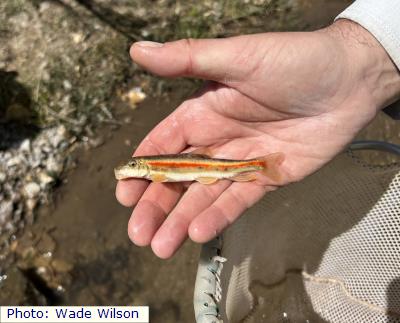
The Rio Grande Sucker (Catostomus plebeius) is a small (10-15 cm [4-6 in]) fish that occurs from Colorado and New Mexico south to Chihuahua, Durango, and Zacatecas, Mexico. In New Mexico, it is primarily found in the Rio Grande and Mimbres River drainages. It inhabits small to medium rivers and is usually found in moderate- to high-velocity sections of the river that have gravel and cobble substrates and clear water. It spawns in spring and, depending on conditions, will sometimes spawn again in the fall. The Rio Grande Sucker will experience a high degree of climate exposure and has a low adaptive capacity. Overall, it has a Climate Change Vulnerability Index ranking of Highly Vulnerable under both Representative Concentration Pathway (RCP) 4.5 and RCP 8.5 Scenarios. The Rio Grande Sucker’s climate change vulnerability is impacted by factors related to distribution, life history, ecological role, and abiotic niche, which influence its ability to shift in space, persist in place, and respond to climate change impacts. It is also impacted by barriers and other anthropogenic and biologic factors that could increase the effects of climate change.