

| Scientific Name | Poeciliopsis occidentalis occidentalis |
| Category | L |
| Taxon | Fish |
| Climate Change Vulnerability Score | Extremely Vulnerable |
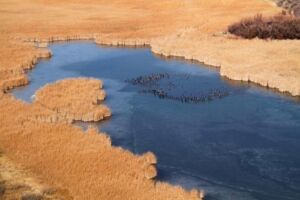
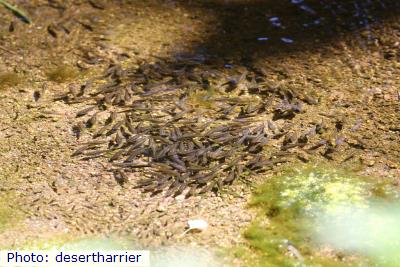
The Gila Topminnow (Poeciliopsis occidentalis occidentalis) is a small (up to 6 cm [2 in]) fish that was historically abundant and widespread in the Gila River system and Rio Yaqui drainages of Arizona, New Mexico, and Sonora, Mexico. Though still abundant in Sonora, it was extirpated from New Mexico and then reintroduced near Lordsburg, and in Arizona, it has been restricted to fewer than 20 isolated populations. It is typically found in lowland vegetated streams that are warm and shallow with low to moderate flow. Females are fertilized internally and bear live young. The Gila Topminnow will experience a high degree of climate exposure and has a low adaptive capacity. Overall, it has a Climate Change Vulnerability Index ranking of Extremely Vulnerable under both Representative Concentration Pathway (RCP) 4.5 and RCP 8.5 Scenarios. The Gila Topminnow’s climate change vulnerability is impacted by factors related to distribution, movement, and evolutionary potential, which influence its ability to shift in space and respond to climate change impacts. It is also impacted by barriers, land-use changes, and other anthropogenic and biologic factors that could increase the effects of climate change.