
| Scientific Name | Lynx canadensis |
| Category | L |
| Taxon | Mammals |
| Climate Change Vulnerability Score | Highly Vulnerable |
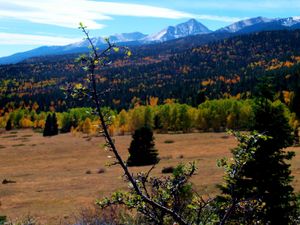
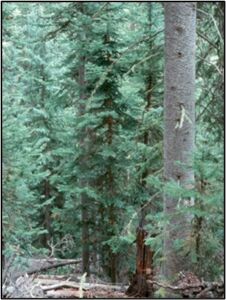
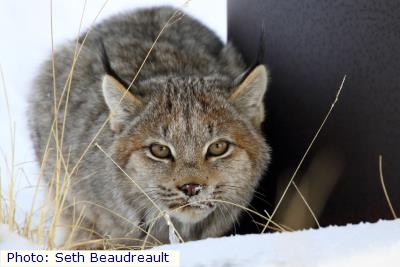
The Canada Lynx (Lynx canadensis) is a large (48-56 cm [19-22 in]; 5-17 kg [11-37.5 lb]), wild cat of Canada and the northern US. It is typically found in mature forests with ample undergrowth, but it has also been observed in rocky areas and tundras. The Canada Lynx is carnivorous, eating primarily Snowshoe Hares (Lepus americanus hairdii). The Canada Lynx will experience a high degree of climate exposure and has a moderately low adaptive capacity. Overall, it has a Climate Change Vulnerability Index ranking of Highly Vulnerable under both Representative Concentration Pathway (RCP) 4.5 and RCP 8.5 Scenarios. The Canada Lynx’s climate change vulnerability is impacted by factors related to distribution, evolutionary potential, and abiotic niche, which influence its ability to shift in space and respond to climate change impacts. It is also impacted by barriers and other biologic factors that could increase the effects of climate change. It also has documented or modeled responses to climate change that impact its climate change vulnerability score.