

| Scientific Name | Aneides hardii |
| Category | I |
| Taxon | Amphibians |
| Climate Change Vulnerability Score | Highly Vulnerable |
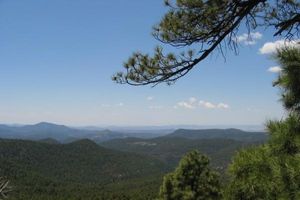
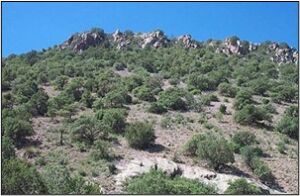
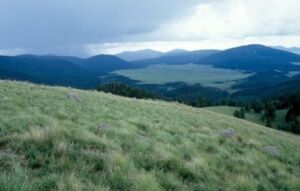
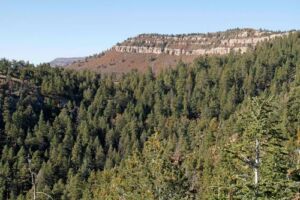
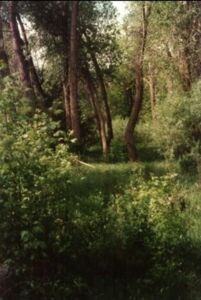
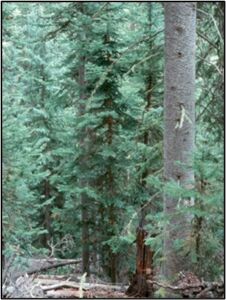
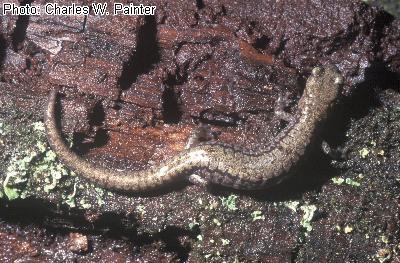
The Sacramento Mountain Salamander (Aneides hardii) is a small (up to 6 cm [2 in]), slim-bodied, lungless salamander found only in the Capitan Sacramento, and White Mountains in southeastern New Mexico. It is found in moist wooded sites characterized by conifers that include Douglas fir (Pseudotsuga menziesii), true firs (Abies spp.), spruce (Picea spp.), and some pine (Pinus spp.). Because it relies on breathing through its skin, it is sensitive to desiccation and spends most of their time sub surface, only emerging when conditions are humid. The Sacramento Mountain Salamander will experience a high degree of climate exposure and has a low adaptive capacity. Overall, it has a Climate Change Vulnerability Index ranking of Highly Vulnerable under both Representative Concentration Pathway (RCP) 4.5 and RCP 8.5 Scenarios. The Sacramento Mountain Salamander’s climate change vulnerability is impacted by factors related to distribution, movement, demography, life history, and abiotic niche, which influence its ability to shift in space, persist in place, and respond to climate change impacts.