

| Scientific Name | Xyrauchen texanus |
| Category | F |
| Taxon | Fish |
| Climate Change Vulnerability Score | Less Vulnerable |
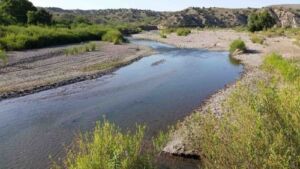
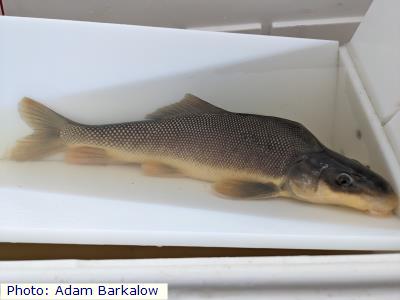
The Razorback Sucker (Xyrauchen texanus) is a large (over 0.9 m [3 ft] long) fish that occurs in the Colorado River system, though rarely above the Grand Canyon. In Arizona, it occurs in Lake Mojave on the Colorado River and, in New Mexico, it has been reintroduced to the San Juan River. It inhabits deep, fast-flowing water in large rivers and backwaters and can also be found in reservoirs. It is threatened by non-native fish predation and loss of habitat. The Razorback Sucker will experience a high degree of climate exposure and has a moderately high adaptive capacity. Overall, it has a Climate Change Vulnerability Index ranking of Less Vulnerable under the Representative Concentration Pathway (RCP) 4.5 Scenario and Moderately Vulnerable under the RCP 8.5 Scenario. The Razorback Sucker’s climate change vulnerability is impacted by factors related to movement, demography, life history, and abiotic niche, which influence its ability to shift in space, persist in place, and respond to climate change impacts.