

| Scientific Name | Pinicola enucleator montana |
| Category | D |
| Taxon | Birds |
| Climate Change Vulnerability Score | Moderately Vulnerable |
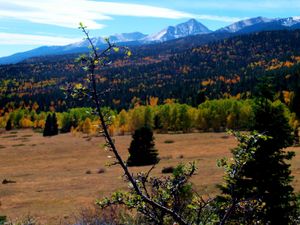
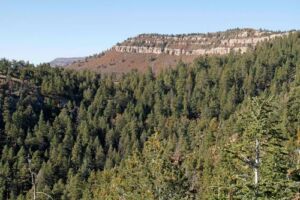
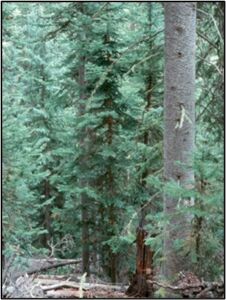
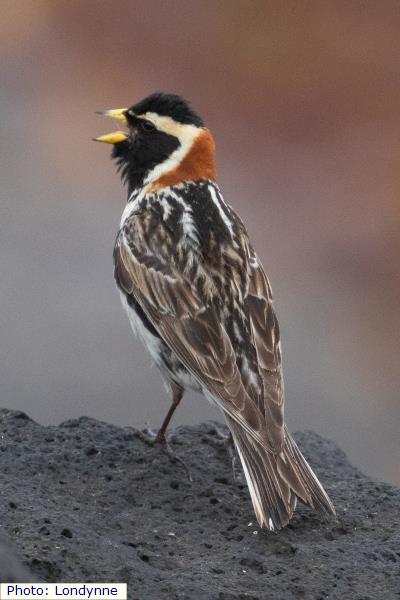
The Pine Grosbeak (Pinicola enucleator montana) is a chunky bird (20-25 cm [8-10 in] long; 56 g [2 oz]) with a heavy, finely hooked bill. Males are bright red and gray; females have an orange wash over gray. It eats buds, seeds, and fruits on the ground or in trees. It is found in open evergreen forests with spruce (Picea spp.), pine (Pinus spp.), or fir (Abies spp.) across Canada and the northern US and Rocky Mountain regions. The Pine Grosbeak will experience a high degree of climate exposure and has a high adaptive capacity. Overall, it has a Climate Change Vulnerability Index ranking of Moderately Vulnerable under both Representative Concentration Pathway (RCP) 4.5 and RCP 8.5 Scenarios. The Pine Grosbeak’s climate change vulnerability is impacted by factors related to movement and abiotic niche, which influence its ability to shift in space and respond to climate change impacts. It also has documented or modeled responses to climate change that impact its vulnerability score.