

| Scientific Name | Gila intermedia |
| Category | F |
| Taxon | Fish |
| Climate Change Vulnerability Score | Highly Vulnerable |
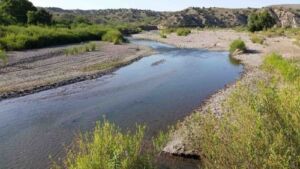
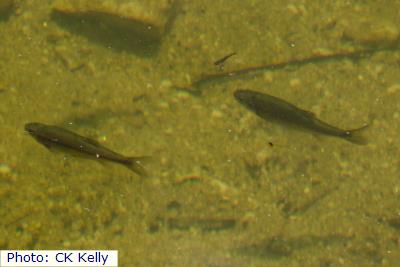
The Gila Chub (Gila intermedia) is a small (6 cm [2 in]), secretive fish that was historically found through the Gila River basin in Arizona and New Mexico but currently occurs in southeastern Arizona and in remnant populations in two creeks (Mule Creek and Turkey Creek) in southwestern New Mexico. It is typically found in the quiet, deep waters of pools or hidden by the cover of vegetation, boulders, and fallen logs. It eats insects, algae, and fish. Recent taxonomic work suggests that Gila Chub in New Mexico may be the same species as two other limited-distribution fishes of the lower Colorado River drainage, Headwater Chub (Gila nigra) and Roundtail Chub (Gila robusta). The Gila Chub will experience a high degree of climate exposure and has a low adaptive capacity. Overall, it has a Climate Change Vulnerability Index ranking of Highly Vulnerable under both Representative Concentration Pathway (RCP) 4.5 and RCP 8.5 Scenarios. The Gila Chub’s climate change vulnerability is impacted by factors related to distribution and abiotic niche, which influence its ability to shift in space and respond to climate change impacts. It is impacted by barriers, land-use changes, and other anthropogenic and biologic factors that could increase the effects of climate change. It also has documented or modeled responses to climate change that impact its climate change vulnerability score.